
A beautiful wedding venue can still feel strange if guests cannot find their seats, reach the bar, or see the main events. Good design should make the space easier and more comfortable to use.
The following wedding venue design tips focus on practical details that can improve the day for everyone.

1. Look at the Venue From a Guest’s View
Think about what guests will experience from the moment they arrive.
Will they know where to go? Is the ceremony easy to find? Can they reach the reception without confusion? Are the bar, restrooms, and exits accessible without crossing crowded areas?
Walk through each part of the event:
- Entrance and welcome area
- Ceremony seating
- Cocktail space
- Dining area
- Bar
- Dance floor
- Lounge seating
- Restrooms and exits
A furniture arrangement may look good in a photograph but cause problems once the room fills. Move anything that blocks a path, hides an important view, or makes seating difficult to use.
2. Give Each Area a Purpose
Separate areas help guests understand how to use the venue. One space may be for welcoming guests, while another is used for cocktails, dining, dancing, or conversation.
Common areas include:
- Welcome or guest-book table
- Ceremony space
- Cocktail area
- Dining area
- Dance floor
- Bar
- Lounge area
- Cake, gift, or memory table
Walls and dividers are not always necessary. Furniture, rugs, lighting, and decorations can separate one area from another without closing off the room.
Avoid filling every empty corner. A space does not need more furniture or decorations unless they serve a clear purpose.
3. Keep Crowded Areas Apart
Bars, buffets, photo booths, entrances, and restrooms can all draw a crowd. Placing several of them together can create long lines and blocked walkways.
A bar beside the entrance, for example, may force arriving guests to walk through a queue. A photo booth along the restroom route can cause another backup.
Spread busy areas across the venue when possible. Keep chairs, tables, and displays away from doors and main walking paths.
Ask the venue or planner to approve the final positions. They will know which exits must stay clear and which routes vendors need throughout the event.
4. Add Places for Conversation
Not every guest will spend the reception at a dining table or on the dance floor. Some will want a comfortable place to sit and talk.
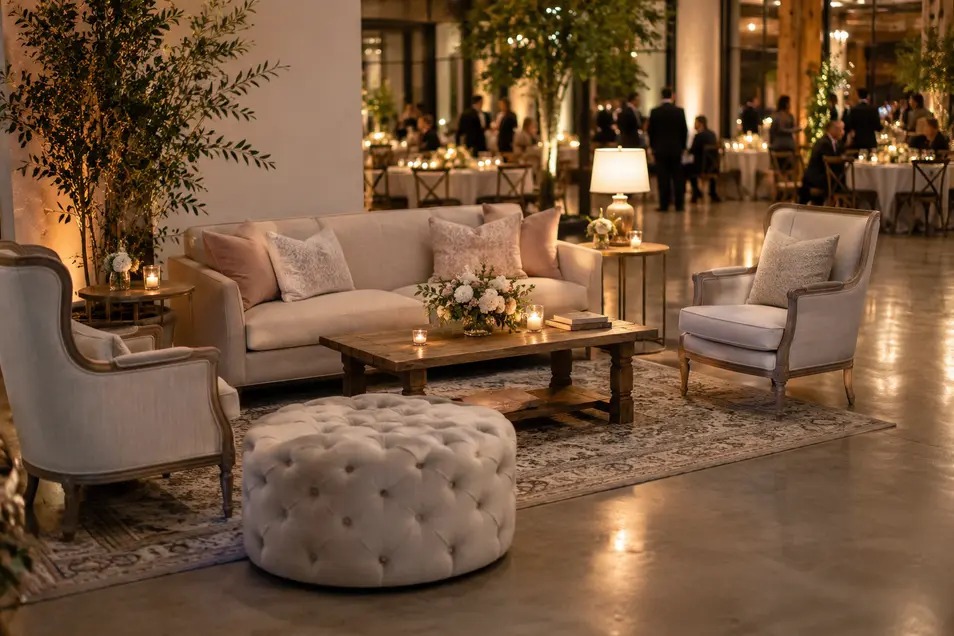
A simple conversation area may include:
- A sofa or loveseat
- Two armchairs
- An ottoman
- A coffee table
- One or two side tables
Coffee and side tables give guests somewhere to place drinks, phones, purses, and other personal items. Sofas and chairs without nearby tables may look attractive but can be awkward to use.
Keep lounge seating near the reception so guests still feel involved. Do not place it beside loudspeakers, a crowded bar, or a busy walkway.
5. Offer Different Types of Seating
One type of seat will not work for every guest or every part of the wedding. Dining chairs are useful during the meal, while sofas and armchairs provide a more relaxed option later.
A wedding may use a mix of:
- Dining chairs
- Sofas and loveseats
- Armchairs
- Benches
- Ottomans
- Cocktail tables
- Coffee and side tables
Seats with supportive backs and arms can be helpful for older guests, pregnant guests, and people with limited mobility. Low lounge seating may not suit everyone, so include other options nearby.
Before renting additional pieces, ask the venue for a written furniture list. Check what is included, how many pieces are available, their sizes and condition, and whether any extra fees apply.
If the venue does not provide everything you need, explore furniture rental options for weddings in Dallas to compare available seating, tables, lounge furniture, and specialty pieces. Your venue or planner should confirm the final quantities and placement.
6. Choose Furniture That Fits the Space
Large sofas and tables can crowd a small room. On the other hand, a few small pieces may look lost in a ballroom or warehouse-style venue.
Compact furniture usually works better in smaller venues because it leaves more room for guests to walk. Avoid adding chairs or tables that do not have a clear use.
A larger venue may have space for several seating groups. Keep related pieces together instead of scattering them around the room.
Outdoor weddings require a few extra checks. Ask whether the furniture can be placed on grass, gravel, paving, or uneven ground. Confirm the backup plan for rain, wind, or wet conditions.
Measure larger pieces before ordering them. Compare their dimensions with the venue’s doors, hallways, elevators, and loading areas. A sofa may fit inside the ballroom but not through the doorway leading to it.
You should also ask about delivery and pickup times. Some venues have short access windows or require rental companies to use a separate loading entrance.
7. Use Lighting Where It Is Needed
The same lighting will not work for every part of the venue. Dining tables, lounge areas, walking routes, displays, and dance floors have different needs.
Consider:
- Comfortable lighting around dining tables
- Softer light near lounge seating
- Brighter light along paths and steps
- Focused light for speeches and displays
- Suitable lighting for photographs
- More colorful lighting around the dance floor
Visit the venue at about the same time of day as the wedding. A room that looks bright during an afternoon tour may be much darker during an evening reception.
Check entrances, outdoor paths, steps, and parking connections after sunset. Decorative lighting may create the right mood, but guests still need to see where they are walking.
Lighting stands and cables should also stay out of walkways. Confirm their positions with the venue, planner, photographer, or lighting provider.
8. Check the View From Every Area
Guests should be able to see the ceremony, speeches, first dance, and other important moments. Tall centerpieces, columns, screens, large displays, and furniture can block those views.
Check the view of:
- The ceremony
- The couple’s table
- The speech area
- The dance floor
- The band or DJ
- Screens or presentations
Test the view while sitting down. A centerpiece that seems fine while you are standing may completely block a seated guest’s view.
Ask the venue or planner to review the room before the event. A small change, such as moving a display or lowering a centerpiece, may solve the problem.
9. Consider Accessibility Early
Accessibility should be considered before furniture and decorations are placed.
Think about:
- Wheelchair users
- Guests with limited mobility
- Older adults
- Pregnant guests
- Families with children
- Guests who need quieter seating
Accessible seating should be included with the main guest seating where possible. Guests should not be separated from their families or friends.
Keep routes to the ceremony, reception, restrooms, and exits clear. Furniture and decorations should not make these paths difficult to use.
Ask the venue to confirm its accessibility requirements, approved routes, seating arrangements, and property restrictions.
Comfort also matters. Some guests may need a chair with a supportive back and arms, a shorter route to the restroom, or seating farther away from loud music.
Wedding Venue Design Mistakes to Avoid
Before approving the design, check for these common problems:
- Choosing appearance over comfort
- Blocking natural walking paths
- Placing several crowded areas together
- Using furniture that is too large for the room
- Providing only dining chairs or standing tables
- Forgetting tables beside lounge seating
- Ignoring doors, elevators, and loading access
- Checking the lighting only during the day
- Ordering rentals before getting venue approval
Complete one final walkthrough with the venue or planner. Confirm furniture positions, delivery times, vendor access, accessible routes, weather plans, and setup responsibilities.
Make the Venue Easy to Enjoy
A wedding venue does not need to be packed with furniture and decorations. Guests need comfortable seating, clear walking paths, good views, and enough room to enjoy the event.
Start with the furniture the venue already provides. Then add only what is missing or what will make the space more comfortable and useful.
Need Furniture for Your Dallas Wedding?
DFW Lounge Rentals provides sofas, loveseats, chairs, cocktail tables, coffee tables, side tables, portable bars, ottomans, and other furniture for weddings throughout Dallas–Fort Worth. Free delivery and pickup are included.
Last Updated on September 14, 2026
