
Japan is one of those countries that is packed with tech and innovation, but somehow it still feels old and ancient; it’s a clear example of how the future meets the past. I have been there a few times already, and I can’t stop noticing how many travelers rush through the cities and miss the unique island life in the south of the country, which is why I decided to write an itinerary that takes you from Tokyo to Okinawa.
Tokyo is great, and you would need months to fully check it out, but the truth is that the rest of the island has a lot to offer too, which makes a cross-country itinerary worth it. It’s the best way to know more and truly immerse yourself in the culture.

Starting Off in Tokyo
There’s no better way to start your journey than in Tokyo, a city with a unique energy. It’s packed with neon lights, anime culture, and a lot of people, but despite being so crowded, the city has a huge pro: everything works perfectly.
The trains arrive exactly on the minute, most streets are clean, there’s a place to eat on every corner, most konbini stores are open 24/7, and even if you don’t speak Japanese, you can easily get by using the machines around the city.
Try to spend at least two days here since you will want to spend your first day just walking around, focusing on visiting popular spots like Shibuya Crossing, Meiji Shrine, or the Senso-ji Temple, as well as popular neighborhoods like Harajuku or Akihabara.
The best part is that the food here is incredible, and you don’t have to spend a lot of money to eat well. You can grab ramen from a vending machine, try convenience store egg sandwiches, or head to a Yakiniku restaurant.
Visiting Ancient Temples in Kyoto
The capital is fast, and can easily overwhelm you if you’re not used to a bustling city; that’s why the best place to visit next is Kyoto, which is a lot calmer. To get there, you can easily take a bullet train; you will be there in less than 2 hours, and there’s a train almost every 5-15 minutes.
The first thing you will notice is how calm Kyoto feels, and the second thing is how it actually feels like an open-air museum. After all, this city is the heart of traditional Japanese culture. Here you will find narrow streets lined with old wooden tea places, and geishas walking around.
After you have walked around the city center and main areas, head to Arashiyama to enjoy a stunning walk through tall bamboo forests. While there, go and check out the Arashiyama Park Kameyama Area, as well as the Okochi Sanso Garden and the Okochi Denjiro Memorial Museum.

Trying the Best Street Food in Osaka
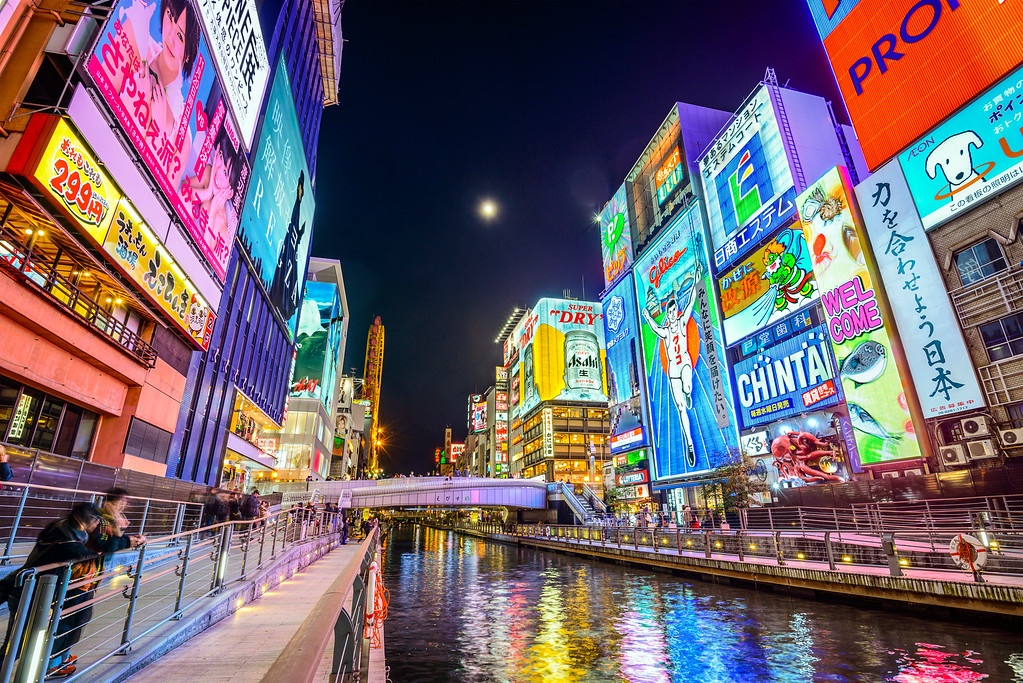
If Kyoto is Japan’s museum, then Osaka is the country’s kitchen, and while there are a ton of places to visit here, food is the one ruling everything. It’s one of the few places on the island where you can still find actual street food.
Here, the streets are bright, noisy (but in a different way than in Tokyo), and packed with locals chatting and laughing. So, the first place you want to go to is Dotonbori, where you will find stalls, giant signs, and neon signs. The perfect place to try takoyaki (octopus balls topped with sweet sauce and dancing fish flakes) and Okonomiyaki (a pancake with cabbage and meat).
Another great place to check is Kuromon Ichiba Market, which is a popular market that transforms into a snacking hub by the afternoon. There you can find seafood, fresh sashimi, and a lot more. I highly recommend that you try Kushikatsu (deep-fried skewers).
Visiting the Tropical Islands of Okinawa
Now, it’s time to leave the mainland and take a plane for three hours from Osaka to one of Japan’s hidden secrets. Once on the Okinawa island, chances are that you get to Naha city, which is the biggest on the island, a perfect way to introduce you to the atmosphere of Okinawa, because it’s different in the best possible way.
By now, you should have traveled Japan enough to feel the differences. Here, the tall buildings are gone as well as the crowds; everything is more spacious, and you can find white beaches, palm trees, and water so blue it doesn’t look real.
This place looks like an actual beach destination with a laid-back pace, locals ride bikes, there are gardens, and fresh seafood.
Now, there are several attractions you must visit while in Okinawa, like the Shuri Castle or the Okinawa Churaumi Aquarium, as well as the beaches and the Makishi Public Market. After that, I highly recommend that you take a tour and visit as many islands as possible; it’s a true adventure.
I skipped the hotel pool and joined Evertrail Tours for their three-day, two-night island-hopping tour, and it was the right move. The guides were really professional and actually helpful; they showed us local spots for dinner and took us on private snorkeling and fishing trips. We swam with sea turtles, caught our own dinner, and hiked through the jungle to waterfalls.

📖 Recommended Reading: If you’re looking for more useful information, check out:
- 8 Best Cities in Japan to Experience Samurai Culture
- What To See And Do On Your Trip To Japan
- How Many Days in Japan do you need for the perfect trip?
- The Art Islands Circuit: Beyond Naoshima to Japan’s Coastal Art Revolution
- Seasonal Highlights: Experiencing Japan’s Cherry Blossom and Autumn Leaves
Conclusion
There’s no trip to Japan without a good visit to Tokyo, but the country has so much more to offer that will leave you surprised. That’s why the itinerary starts in the city but ends on a beach, mainland and island life are nothing alike, but together they show you both sides of the country.
This itinerary is the best way to fully get what the country and its amazing culture have to offer. You may visit each and every corner, but you’re sure to check out the best of it.
Frequently Asked Questions
Flying from Tokyo down to Naha takes about two and a half to three hours. If you fly from Osaka, it is slightly shorter, usually taking just over two hours. Domestic flights are very common and run multiple times a day.
No, you do not need a separate visa. Okinawa is a prefecture of Japan. As long as you have the proper tourist visa or passport stamp to enter the mainland, you are fully cleared to fly down to the islands.
Not at all. In the big cities, almost all train signs and restaurant menus have English translations. Down in the islands, the locals are incredibly friendly and helpful. Using a simple translation app on your phone will easily help you order food and ask for directions.
Spring and fall are usually the best times to go. The weather on the mainland is cool and comfortable, and the trees look beautiful. Down south, the weather stays warm enough for swimming from early spring all the way through late fall.
The bullet trains are very easy to use. The stations are clearly marked, and the trains arrive exactly on time. You simply buy a ticket at a machine or a window, find your platform, and line up at the numbered markers painted on the floor.
Last Updated on June 14, 2026
