
Rain doesn’t have to ruin a camping trip. If the forecast calls for ordinary rainfall, you can still enjoy camping with a well-drained campsite, a properly pitched tent, and a plan to keep your clothes and gear dry.
Problems usually start when water pools around the tent, sleeping bags get damp, or you have to load wet equipment into the car. A little preparation before leaving can make these situations much easier to handle.
Check the Weather Before You Leave
Rain in the forecast isn’t always a reason to cancel your trip. The important thing is to distinguish ordinary rainfall from dangerous weather.
Check the hourly forecast for your campground, including how long the rain is expected to last, wind speeds, and the risk of thunderstorms. If you’re staying near a river, in a valley, or in a low-lying area, check for flood and flash flood warnings as well.
If thunderstorms, flooding, or dangerous winds are expected, reconsider your trip and follow local safety guidance. Tents don’t provide reliable protection from lightning, and waterproof equipment won’t protect you from severe weather.
If conditions are safe, adjust your plans to suit the rain. You might spend less time outdoors and more time reading, resting, or talking with family. There’s no need to fit every planned activity into the day.
Choose a Campsite With Good Drainage
When rain is expected, good drainage matters more than a scenic view.
Look for level ground that drains well, away from low spots, puddles, and areas where water naturally flows. Even if the ground is dry when you arrive, signs of erosion may reveal where rainwater collects or runs through.
Trees don’t always provide a good place to shelter from rain. Branches can continue dripping, while dead limbs may fall during strong winds. Check for hazards overhead before setting up your tent.
At campgrounds with designated sites, stay within the permitted area. Don’t dig trenches or disturb the ground to redirect rainwater.
Wet ground can also become slippery or muddy. Consider where you’ll park and how you’ll carry your gear to the campsite so you don’t have to keep walking through puddles.
What Makes a Tent Suitable for Rainy Weather?
A “waterproof” label doesn’t tell you everything about a tent’s performance in the rain. Fabric coatings, sealed seams, door and window design, and floor waterproofing all affect how well it keeps water out.
When using inflatable tents, follow the manufacturer’s instructions for inflating and securing the air beams. These tents don’t require traditional pole assembly, but they still need proper inflation, stakes, and guy lines.
Waterproof ratings help you compare fabrics, but they don’t guarantee a leak-free tent. Rain can still enter through poorly closed doors, windows, or damaged seams.
If you’ve used your tent for several seasons, check the coating, seams, and groundsheet for wear before your trip. It’s easier to spot and address damage at home than to discover a leak at the campground.
Why Does Your Tent Feel Damp When It Isn’t Leaking?
Water droplets inside your tent don’t always mean rain is getting through. Moisture from breathing, wet clothes, and humid air can condense on cooler surfaces.
Keeping rain out is only part of the challenge. Your tent also needs enough ventilation to release moisture, especially when the whole family spends more time inside. Without it, bedding and clothes can gradually become damp.
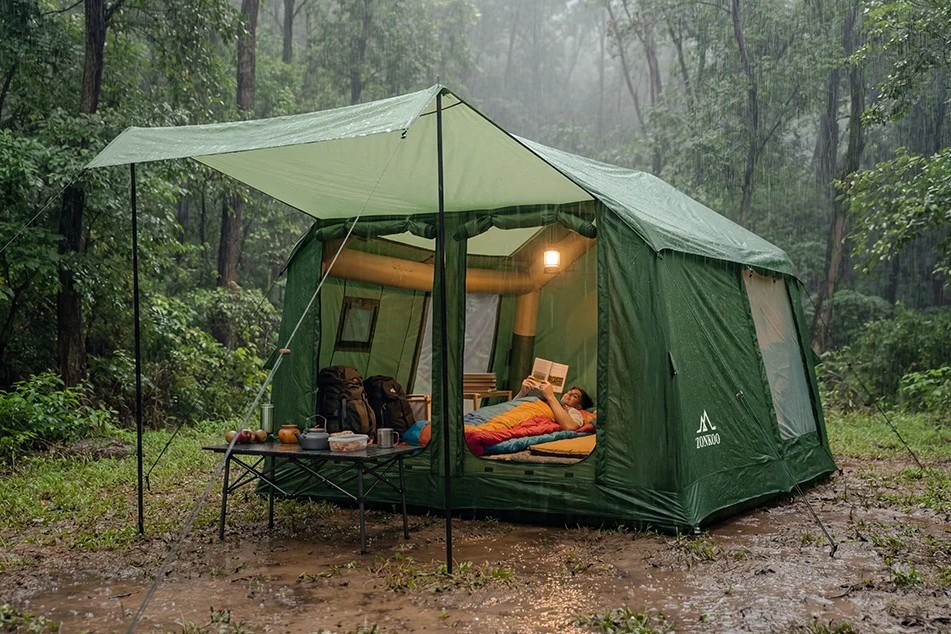
Take the ZONKOO Vega, for example. This model of inflatable tents for camping has a PU5000 mm waterproof coating and seven windows. The coating helps keep rain out, while the windows allow for ventilation. Both are important when a family spends hours inside a tent on a rainy day.
Keep sleeping bags and other bedding away from damp tent walls when possible. If you notice water droplets, check where they’re forming, whether the doors and windows are properly closed, and how well the tent is ventilated. This can help you tell condensation from a leak.
How to Keep Wet Clothes and Gear From Soaking Your Sleeping Area
Even if your tent doesn’t leak, wet clothes and muddy shoes can leave your sleeping area damp.
Before entering, shake excess water off your raincoat and remove mud from your shoes. Keep wet footwear and rain gear in one place, away from your sleeping pad. Store spare clothes, electronics, and other items that need to stay dry in waterproof bags.
Don’t leave backpacks or suitcases exposed to rain for long periods, even if they’re made from water-resistant fabric. If the campground has a covered area for organizing gear, use it where permitted.
Before bed, check the tent entrance, floor, and sleeping area for moisture. Cleaning up a small puddle immediately is easier than dealing with wet bedding the next morning.

How to Pack Up Your Tent While It’s Still Raining
Sometimes it’s time to leave before the rain stops, and you have no choice but to pack a wet tent.
Start by putting sleeping bags, clothes, and electronics into waterproof bags. Then take down the tent, keeping the wet fabric separate from your dry belongings for the journey home.
Follow the manufacturer’s instructions when dismantling your tent. Avoid pulling too hard on zippers, air beams, or fittings, even if you’re in a hurry. You can give muddy stakes and guy lines a quick clean before packing them and wash them thoroughly at home.
A wet tent can be packed temporarily for transport, but it shouldn’t remain sealed in its bag. Unpack the tent, groundsheet, and accessories as soon as you get home. Let everything dry completely according to the care instructions before storing it to reduce the risk of mold and musty odors.
What Camping Gear Should You Repair or Replace After a Rainy Trip?
A rainy camping trip can reveal which pieces of equipment need attention. Before buying replacements, check what caused the problems.
If your tent leaked, inspect how it was pitched, whether the doors and windows were properly closed, and the condition of the seams. Some leaks can be fixed with adjustments or repairs without replacing the entire tent.
If the waterproof coating is badly worn, seams continue to leak, or repairs no longer work, it may be time for a replacement. Check your sleeping pads, rainwear, and waterproof storage bags as well.
Once you know what needs replacing, seasonal sales such as black friday deals can be a useful time to compare products and prices. Check waterproof performance, size, intended use, and warranty coverage before buying rather than choosing an item simply because it’s discounted.
Your experience during the trip can help you decide which upgrades matter most, instead of relying on a generic camping gear checklist.
A Rainy Camping Trip Can Still Be Memorable
Rain doesn’t automatically spoil a camping trip. As long as conditions are safe, choosing a well-drained campsite, keeping wet gear separate from dry belongings, and allowing proper ventilation can prevent many common problems.
Sometimes, sitting inside your tent listening to the rain, watching droplets fall from the leaves outside, and waiting for the clouds to clear becomes one of your favorite memories from the trip.
Last Updated on November 1, 2026
