
The Taj Mahal is a beautiful love poem frozen in marble which has been telling stories of love for a long time.
Deep inside the intricate and richly colored fabric of India’s history, this crown jewel of Mughal era is a world, famous heritage site that is much more than just a beautiful building. Constructed back in the 17th century, the monument attracts several million visitors every year being a magnificent emblem of the blending of cultures between Persians, Muslims, and Indians.
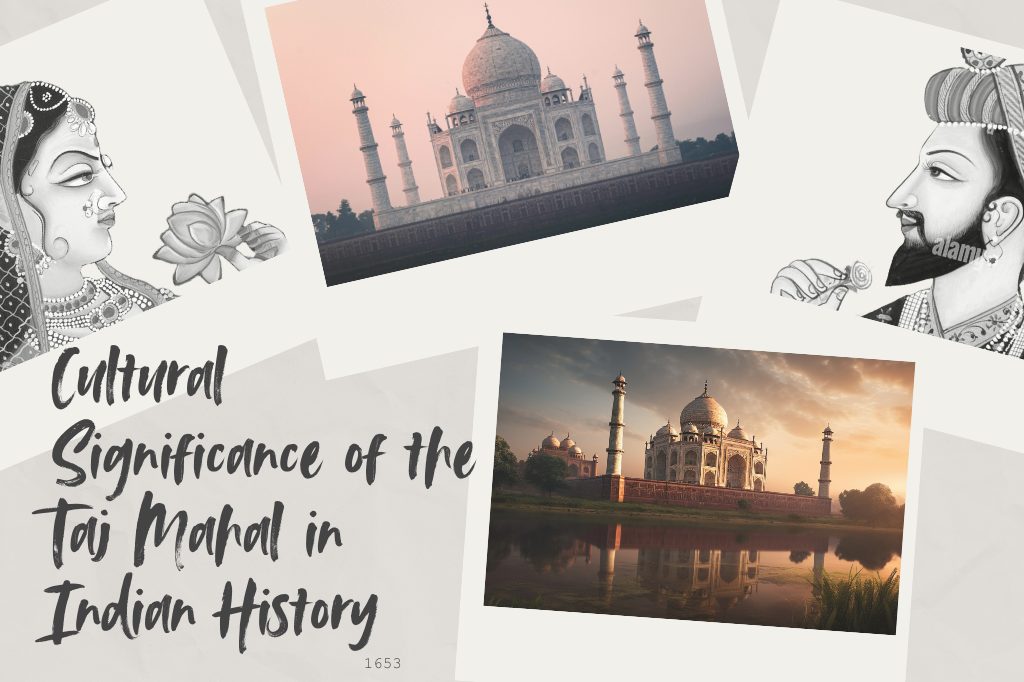
A Monument Born of Heartbreak and Devotion
Imagine that a grief, stricken ruler transforms his grief into a monument that would be considered the most romantic of all times. Emperor Shah Jahan ordered the building of the Taj Mahal in the year 1632, when his wife, Mumtaz Mahal, died giving birth to their child. It was a love story; he had taken her along for 14 campaigns, and Aden this monument at Agra was the result of such a love. It is not just a grave, but a lovers’ promise to eternity. The choice of the place, near the Yamuna River, combined the symbolism of the transient beauty of life with the eternal nature of the river.
Capitalizing on various stylistic elements throughout the era, it features the beauty of domed pavilions from Samarkand, the delicate jali grills from Hindu temples, and the minarets represent the Islamic paradise. The project demanded over 20, 000 craftsmen and 22 years of work, the white marble from Makrana was chosen for its enchanting early morning luminescence. Every inch of the design and includes the verses of the Quran in calligraphy that speak of unity in diversity.
Echoes of Mughal cultural fusion
Enter the Taj, and you’ll immediately get the vibe of a syncretic empire where different cultures melodiously intertwined. The Mughals were the progenies of Timur and Genghis Khan, and ruled India since 1526, fusing their Central Asian origins with the local traditions. The Taj is a perfect representation of this: its gardens are of Persian charbagh style, fourfold like the Koran’s four rivers of paradise, yet they also have Indian chhatris (pavilions). Shah Jahan’s dream made Agra a meeting point of cultures that could compete with European Renaissance courts.
Craftsmen etched Quranic verses using black onyx, and the lines were skillfully curved to resemble a heavenly handwriting, while marble flowers inlayspietra durasymbolize an everlasting spring. This blend had a wide, scale effect on Indian art, extending to Rajput, style paintings and even architecture under the colonial period. The Taj is not just a monument; it is a blend of diverse elements into the cultural fabric of India.
Spiritual and Symbolic Layers
Underneath its smooth marble surface is a deep spiritual conversation about life, death, and God. Paradise in Muslim faith is said to have rivers of milk, water, wine, and honey; the reflecting pools of the Taj represent this perfect world. The highest dome of the Taj is invoked as a symbol of Mount Meru, the cosmic axis, by the Hindus. This worldwide attraction has made it a place of pilgrimage for the human spirit in search of transcendence.

The cenotaph of Mumtaz, decorated with a replica of the Quran, highlights the feminine aspect in Mughal spiritualitya facet which was unusual at that time. Shah Jahan then came to join her, his tomb being a bit apart, thus symbolizing never, ending companionship. Jains and Sikhs worship its symmetry as the harmony of karma. One can experience a spiritual renewal, which is eternal and without borders, by visiting it.
The Taj Mahal in Art, Literature, and Folklore
From the Rabindranath Tagore’s “a tear on the cheek of time” to song lyrics of Bollywood movies, the Taj attracts artists who never run out of ideas. Besides the poets such as Ghalib who glorified the beauty of the Taj Mahal in Urdu ghazals, European tourists like Tavernier described its magnificence in 1665, thus the fascination of the whole world was stirred. William Hodges, through his paintings, brought its divine figure to the British public. This monument is an author of love stories in all languages it meets.
There are numerous folk stories: one of them tells that Mumtaz’s spirit comes out during the full moon night, and her anklets can be heard faintly. From novels to movies, modern medias romanticize it, thus giving it a place in the international pop culture. Nevertheless, the real story of the Taj is in silent meditation, a long way from the lens.
Conservation amidst modern challenges
Protecting the heritage of the Taj requires one to fight time, pollution, and the presence of crowds, however, there is still hope. It was declared a UNESCO site in 1983, and actions such as the Supreme Court’s 1996 establishment of the Taj Trapezium Zone have helped to reduce industrial emissions. The use of mud pack treatments and optical fiber lighting safeguards its marble from turning yellow. Green methods at the Taj will make sure that the next generations can admire its beauty as if it were the first day.
Climate change results in less water in Yamuna, which is very important for the reflection of the Taj and this is why the river is being cleaned. The local people are encouraged and trained as guides through community programs so the sense of belonging and ownership is their own. The Taj symbolizes the resilient spirit of India through its never, give, up attitude.
The Taj Mahal Tour from Delhi: A Gateway to Wonder
A Taj Mahal Tour from Delhi is the perfect way to take a poetic chapter of history out for a walk. What at first seems like a mere trip actually becomes a full, fledged cultural experience, linking the hustle and bustle of the capital with the quiet of Agra. Trains pass by the bright, yellow mustard fields, giving you a peek at the rural parts of India on the way.
It is not just matter of travelling but one of time travelling to an emperor’s heart.

Taj Mahal Tour by Train: Romance on Rails
Imagine getting on a Taj Mahal Tour by Train, your iron wheels carrying you to the marble dreams. Leaving the famous stations of Delhi, these rides through the landscape will evoke the Raj era, and you will see the Ganges plains opening up like a painting made by nature.
Get to your destination feeling re, energized, and at dawn ready to stroll down the flower garden paths. In this way the slow, soulful discovery is perfectly captured.
Global impact and lasting legacy
The iconic shape of the Taj has influenced the design of many famous landmarks, from the Burj Khalifa in Dubai to Washington’s memorials. It has been an element of neo, Mughal style in the Faisal Mosque of Pakistan and even featured in Disney’s It’s a Small World. Politically, it stood as a symbol of the Indo, US relationship during Obama’s visit in 2015. That is why it is not surprising that it is the most photographed monument in India, attracting more than 7 million visitors a year.
Among the 2025 trends, virtual reality tours have been the biggest thing post pandemic, as they combine innovative technology with heritage. Through social media, hashtags like #TajMagic greatly increase the monument’s popularity, especially among Gen Z, who are using it for “slow travel” experiences. Still, nothing can compare to being in the exact spot where Shah Jahan cried.
Why does Taj Mahal resonate today?
In a divided world, the Taj postulates that love can overcome loss, and culture can heal wounds. It compels us to save beauty amidst disorder, just like the Indian democratic spirit. Schools everywhere learn it for acts of kindness and genius. This tomb is alive with meaning, calling for harmony.
Conclusion
The Taj Mahal is not a part of the frozen past; it is a living, breathing element of Indian culture, inviting you to participate in its rhythm. The Taj’s significance changes from Mughal love story to contemporary muse, reflecting mankind’s search for beauty. Schedule your trip to see this marvelallow its towering minarets to move your spirit. In the arms of Agra, history murmurs: love lasts.
Last Updated on January 23, 2026
