
TL;DR – Most safari camps set a minimum age somewhere between six and twelve, which means that a child turning twelve is the moment the entire African continent becomes available to a family rather than a short list of the most accessible reserves. Teenagers turn out to be one of the best audiences a safari has, but only when the trip is built to give them something to be competent at rather than something to sit and watch.
Ask any parent who has taken a family on safari which age worried them most and the answer is rarely the six-year-old. It is the fourteen-year-old. The one who has opinions now, who did not choose this, and whose default posture toward anything organised by a parent is a kind of polite endurance.
That worry is understandable and mostly misplaced. Teenagers are, in practice, one of the most rewarding groups to take into the African bush. But the trips that work with them are built differently from the trips that work with younger children, and the difference is not about luxury. It is about what the teenager is given to do.
KEY TAKEAWAYS
- Safari camps commonly set minimum ages between six and twelve, and the higher limits cluster in remote wilderness areas with walking components and complex medical evacuation.
- Walking safaris are frequently restricted to guests of twelve or sixteen and older, which makes them the single activity that most reliably convinces a teenager the trip was not designed for younger siblings.
- A private vehicle lets a guide pitch the entire drive at the age range in front of them, which matters more for a sceptical fifteen-year-old than for a delighted seven-year-old.
- Kenya’s private conservancies and Zimbabwe’s walking camps consistently outperform a standard park circuit for teenagers because of the depth of the guiding and the range of permitted activities.
- Most remote camps in serious wilderness areas have no mobile signal at all, so the disconnection happens by geography rather than by parental enforcement.

Twelve Is the Age the Whole Continent Opens Up
Many safari camps set a minimum age requirement, typically somewhere between six and twelve depending on the property and the destination. These are not arbitrary policies. An unfenced camp in a wilderness area with free-roaming dangerous game requires guests to follow an instruction immediately and without argument, and the consequences of not doing that in front of a buffalo or a hippo are not recoverable.
The camps setting the higher limits are almost always in remote areas with significant dangerous game, a walking component, or a location where a medical evacuation is genuinely complicated. The camps with lower limits, or none at all, tend to sit in better-infrastructure destinations where the wildlife encounter is more controlled. South Africa’s Eastern Cape reserves, including Shamwari, Kariega and Amakhala, are the classic example, and they welcome children from around four or five without any compromise on the quality of the game viewing.
Which produces an inversion that families rarely see coming. For years, the age limits are the constraint that shrinks the map. Then a child turns twelve and the constraint quietly disappears. East Africa, Botswana, the Great Migration, the Okavango Delta and the private conservancies that produce the best game viewing on the continent all become available at once. The teenage years are not the hard years for an African family trip. They are the first years in which the whole continent is on the table.
Teenagers Need Something to Be Good At, Not Something to Watch
A junior ranger programme is the single most valuable feature a family camp can offer a ten-year-old. Offer the same programme to a fifteen-year-old and you will watch it fail in real time, because the thing that makes it work for a younger child, the sense of being looked after inside a structured activity, is precisely the thing an adolescent is trying to grow out of.
What works instead is competence. Give a teenager a skill with a visible difficulty curve and they engage in a way that no amount of scenery achieves on its own. Tracking is the strongest of these. Learning to read a print in soft sand, to tell a fresh track from an old one, to notice which direction an animal was moving and how long ago, is a genuinely difficult skill that produces obvious feedback, and a teenager who gets good at it by day four is having a different holiday from one who has been driven around looking at things.
Photography does the same work through a different door. So does birding, which teenagers reliably dismiss on day one and are competing over by day five. And walking safaris carry a particular weight here, because many camps restrict them to guests of twelve or sixteen and older. That restriction is the point. An activity a younger sibling is not allowed to do is the clearest possible signal that this part of the trip belongs to the teenager alone.
A Private Vehicle Matters More for Teenagers Than for Small Children
Parents tend to think of a private vehicle as a solution to the problem of a restless young child in a shared car full of strangers. It solves that. But it does more for a teenager, and for a less obvious reason.
In a shared vehicle, a guide is managing a spread of interests and has to pitch their commentary somewhere in the middle. Nobody is badly served and nobody is precisely served either. In a private vehicle, the guide can build the entire drive around the people actually in it. They can go deep on predator behaviour with a teenager who has started asking real questions. They can stop for forty minutes at a hyena den because that is where the interest is. They can hand over the binoculars and the field guide and let a sixteen-year-old call the sighting.
That shift, from passenger to participant, is what turns a sceptical adolescent into someone who is up before the alarm on day three. It is difficult to engineer in a vehicle shared with four other guests, and close to automatic in one that is not.
Zimbabwe, Kenya and Botswana Reward Teenagers More Than a Standard Circuit
For families with younger children, South Africa’s private reserves are the most forgiving place to start and genuinely not a compromise. Short transfers, strong medical proximity, purpose-built family facilities and real Big Five game viewing. For a family with teenagers, the calculation changes, because the constraints that made South Africa the sensible answer no longer apply.
Zimbabwe is the destination that most consistently surprises parents of teenagers. The country’s professional guiding examinations are the most demanding on the continent, and a guide who has passed them is operating at a level of expertise that adolescents recognise and respond to immediately. Teenagers are unusually good at detecting whether an adult actually knows what they are talking about. Put one in a vehicle in Mana Pools or Hwange with a guide who does, and the posture changes within a day.
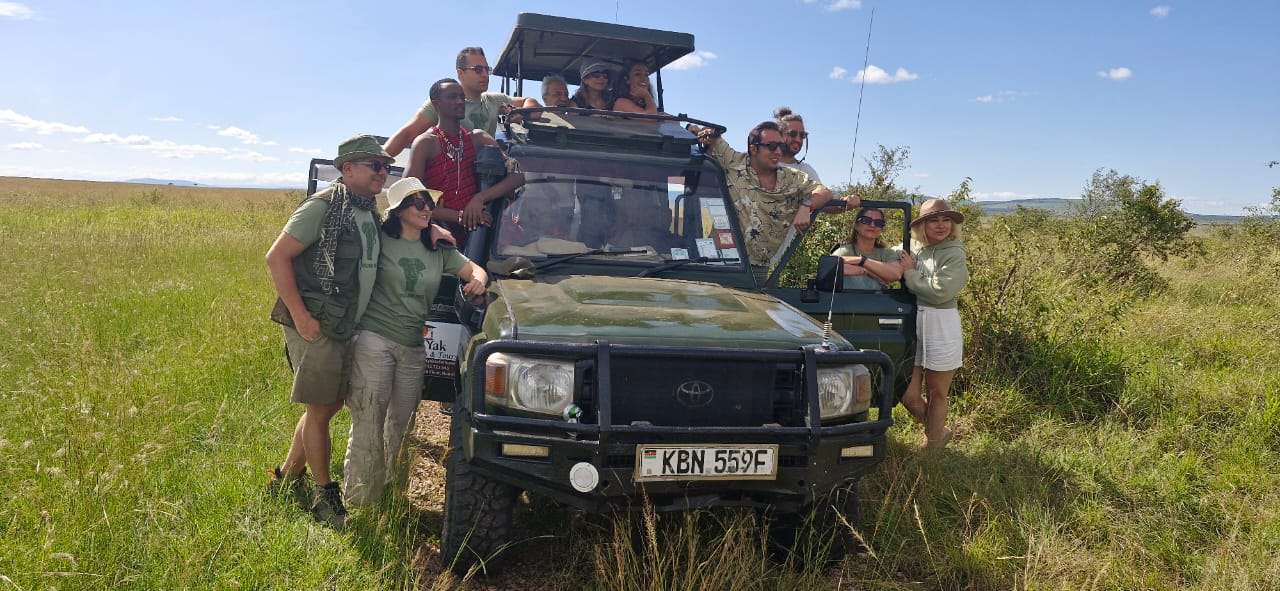
Kenya’s private conservancies work for a different reason. Because the land is leased from local Maasai landowners rather than run as a public park, the operating rules are different, and night drives, off-road driving and walking with a Maasai guide all become possible. That variety of activity, combined with genuine conservation and community stories, gives a teenager considerably more to engage with than a fixed circuit of daytime drives on marked roads. Botswana’s exclusive-use camps in the Okavango Delta and Linyanti deliver something similar at the top of the market, with the added draw of light aircraft transfers between camps, which almost no teenager is neutral about.
The Phone Problem Solves Itself by the Third Morning
Parents arrive at this question braced for a fight, usually having pre-negotiated some rule about screen time that they expect to spend the week enforcing. In practice the rule rarely gets used, for two reasons.
The first is geographical. Most remote camps in serious wilderness areas have no mobile signal at all, not as policy but as a fact of where they are. In the Okavango Delta, the Linyanti and the South Luangwa Valley, the signal simply does not exist. Some camps offer satellite connectivity in communal areas at limited hours, and many offer none. The disconnection is not something anyone has to enforce.
The second is competitive. A phone loses to a leopard. It takes about three days, but the bush eventually out-competes the feed on its own terms, and the shift that follows is the thing parents describe most often afterwards. Not the wildlife. The version of their teenager who reappeared somewhere around day four. If you want to load the odds, the useful move is to hand over a camera with a proper zoom on day one and say nothing else about phones at all.
How Only One Safaris Builds a Family Trip Around the Teenager In It
Only One Safaris is a boutique, expert-led safari company founded by Mark Donnelly and Martina Hirschberg, who between them have spent more than two decades inside the African safari industry, living in Tanzania, running camps, and designing individual itineraries across twelve African countries. The company works with a deliberately limited number of families at a time, which is what makes it possible to build an itinerary around the specific people travelling rather than around a catalogue.
For families, that means starting with the ages in the group and working outward. Which camps will genuinely take a twelve-year-old on a walk. Which guides are good with adolescents, which is a distinct skill from being good with wildlife. Where a private vehicle is worth the cost and where it is not. Their guide to planning a safari with children and teenagers covers the age policies and camp features in detail, and if your trip spans three generations rather than two, their multi-generational safari planning guide deals with the harder version of the same problem. For families working out what any of this costs before they commit, the breakdown of African safari costs is unusually direct about where the money actually goes.
Frequently Asked Questions: Safari With Teenagers
There is no single minimum age for an African safari, because the limit is set by individual camps rather than by any country or authority. Most camps sit somewhere between six and twelve, with the stricter limits concentrated in remote wilderness areas that have free-roaming dangerous game, walking activities, or complicated medical evacuation. Some of the best family properties in South Africa’s private reserves accept children from around four or five. Because these policies vary property by property and change over time, confirm the age rule for every specific camp before building an itinerary around it.
The activities that work best with teenagers on safari are the ones that let them build a skill rather than observe a scene. Tracking is the strongest of these, because reading prints and interpreting animal movement has a real difficulty curve and gives immediate feedback. Wildlife photography and birding do similar work. Walking safaris carry particular weight with this age group, partly because of the experience itself and partly because many camps restrict walking to guests aged twelve or sixteen and above, which makes it an activity a younger sibling cannot join.
A private vehicle is usually worth it for a family travelling with teenagers, and for a slightly different reason than it is worth it for younger children. In a shared vehicle, the guide has to pitch commentary to a mixed group and lands in the middle. In a private vehicle, the guide can build the whole drive around the actual people in it, go deep on the subjects a teenager has started asking about, and hand over the binoculars and the field guide. That shift from passenger to participant is what changes an adolescent’s engagement with the trip.
Zimbabwe, Kenya and Botswana tend to reward teenagers more than a standard park circuit. Zimbabwe’s professional guiding examinations are the most demanding on the continent, and adolescents respond strongly to a guide operating at that level of expertise in areas like Mana Pools and Hwange. Kenya’s private conservancies permit night drives, off-road driving and walking with Maasai guides, giving teenagers considerably more variety. Botswana’s exclusive-use camps in the Okavango Delta and Linyanti deliver the same at the top of the market, with light aircraft transfers between camps.
Most families find they do not have to handle it at all. Remote camps in serious wilderness areas such as the Okavango Delta, the Linyanti and the South Luangwa Valley have no mobile signal by geography rather than by policy, so the disconnection happens without anyone enforcing a rule. Some camps offer satellite connectivity in communal areas during limited hours, and many offer nothing. Parents who want to improve the odds further tend to have more success handing a teenager a camera with a proper zoom lens on the first day than negotiating screen-time rules in advance.
A family safari with teenagers generally needs enough time for the shift in engagement to happen, which most families report somewhere around the third or fourth day. That makes anything shorter than about six or seven nights on the ground a risk, because the trip can end just as the teenager has stopped performing indifference and started participating. Two camps in contrasting ecosystems over seven to ten nights is a common shape that works well, giving enough time in each place to build a skill rather than sampling several destinations in quick succession.
A safari costs significantly more per day than most family holidays, and the honest comparison requires understanding that a safari rate typically bundles all meals, all drinks, twice-daily guided game drives, park or conservancy fees and laundry, with light aircraft transfers included at many fly-in camps. The relevant question for a family with teenagers is not really cost per day but what the trip produces. Parents most often describe the value in terms of the version of their teenager who showed up around day four, which is a difficult thing to price but is the reason multi-generational and family safari alumni tend to return.
Last Updated on August 26, 2026
