
If you know how much electricity your RV consumes on a daily basis, a solar generator can help make your camping trips easier. The number of Watts of storage may range for many RV power stations between approximately 992Wh and 5040Wh. The weight of some RV-ready units is between 27.8 lb and 110 lb. Portable solar panels are generally available in 100W, 240W and 360W sizes.
Other brands also specify an efficiency of 23-25% for the solar cells. These are numbers that permit you to pick up a configuration that is right for your traveling, space and gadgets.
A short trip away requires less energy to be stored than a long off-grid trip. You require the correct size battery, AC output, solar input, outlet types, weight and safety plan.
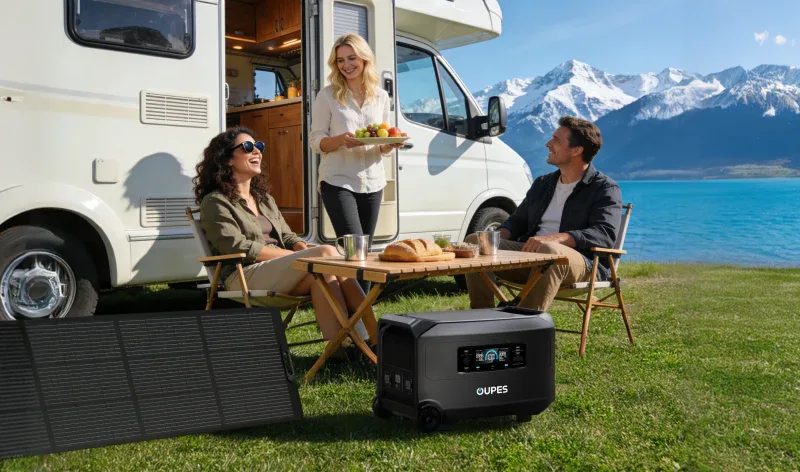
Why Power Planning Helps at Camp
Power affects many small parts of RV life. A good setup helps you keep food cold, charge gear, work online, and relax at night.
You may need power for:
- Phones.
- LED lights.
- RV fridge.
- Water pump.
- Small fan.
- Wi-Fi router.
- Laptop.
- Camera batteries.
- Coffee maker.
- Tablet.
- Small TV.
- Portable speaker.
Good planning also helps you avoid these problems:
- Dead phone batteries.
- Warm food.
- Weak laptop time.
- No fan at night.
- Overload warnings.
- Slow solar charging.
- Too much weight in the RV.
Choose by Camping Style, Not Guesswork
Do not buy the biggest unit only because it looks strong. Match your power station to the way you travel.
Light Weekend Trips
This setup may work for short trips with simple gear.
Common devices include:
- 1 to 2 phones.
- LED lights.
- Small fan.
- Laptop for 1 to 3 hours.
- Camera batteries.
- Compact fridge.
A smaller power station may fit this trip well. You still need to check the fridge, because cooling needs change with heat and door openings.
Family RV Travel
Families often use more energy because several people charge devices at the same time.
Common devices include:
- RV fridge.
- Several phones.
- Tablets.
- Lights.
- Fan.
- Water pump.
- Coffee maker.
- Small TV.
- Game console.
- Extra chargers.
This trip needs more battery storage and a stronger AC output. You also need enough outlets, so people do not keep swapping plugs.
Remote Work or Long Stays
Remote workers need steady power each day.
Useful gear may include:
- Laptop.
- Monitor.
- Router or hotspot.
- Phone.
- Fridge.
- Fan.
- Lights.
- Camera gear.
- Power bank.
- Small printer.
This setup needs extra battery room for cloudy days. Add backup capacity in your solar generator for RV if you work from your RV and cannot risk a power cut.
Know the Main Power Numbers
You do not need complex math. Focus on these numbers.
Battery Size
Battery size uses watt-hours, or Wh. This number tells you how much energy the unit stores.
Simple examples:
- 10W light × 5 hours = 50Wh.
- 60W laptop × 4 hours = 240Wh.
- 100W device × 3 hours = 300Wh.
Heat, cold, battery age, and power loss can reduce real use. Add extra room instead of sizing too tightly.
AC Output
AC output tells you how many watts the unit can run at one time.
Check this number before you use:
- Coffee maker.
- Microwave.
- Hair dryer.
- Induction cooktop.
- Power tool.
- Small AC unit.
A power station may store enough energy, but still shut off if one appliance pulls too many watts at once.
Surge Power
Some devices need extra watts when they start.
Check surge ratings for:
- Fridge.
- Water pump.
- Compressor.
- Air conditioner.
- Power tool.
Choose a unit with more surge room than your device needs. This helps stop sudden shutdowns.

Easy RV Device Sizing Table
Use this table to estimate daily power use.
| Device | Example Watts | Daily Use | Power Needed |
| LED light | 10W | 5 hours | 50Wh |
| Phone charger | 10W | 3 hours | 30Wh |
| Laptop | 60W | 4 hours | 240Wh |
| Small fan | 25W | 6 hours | 150Wh |
| Wi-Fi router | 10W | 8 hours | 80Wh |
| Compact fridge | 40W to 105W | Varies | Check runtime |
| Coffee maker | 800W to 1,500W | Short use | High draw |
| Microwave | 800W to 1,500W | Short use | High draw |
Use this formula:
Watts × hours = watt-hours
Example:
60W laptop × 4 hours = 240Wh
Sample Daily RV Power Plan
Here is a simple daily setup for a light RV camper.
Daily use:
- LED light: 10W × 5 hours = 50Wh.
- Phone charging: 10W × 3 hours = 30Wh.
- Laptop: 60W × 4 hours = 240Wh.
- Small fan: 25W × 6 hours = 150Wh.
- Wi-Fi router: 10W × 8 hours = 80Wh.
Total:
- 50Wh + 30Wh + 240Wh + 150Wh + 80Wh = 550Wh.
Add 20% to 30% extra for clouds, power loss, and safety room.
Better daily target:
- 20% extra: about 660Wh.
- 30% extra: about 715Wh.
Quick Buying Checklist
Use this list before you buy.
- List each device.
- Check the watt label.
- Write the hours per day.
- Add the watt-hours.
- Add 20% to 30% extra.
- Check the highest-watt appliance.
- Check surge watts for motors.
- Review solar input.
- Match panels to your charging goal.
- Check outlet types.
- Check weight and storage space.
- Read the manual.
- Follow campground rules.
- Ask an RV tech before wiring changes.
Solar Power vs Gas Generator
Both options help campers, but they fit different needs.
Battery Power Works Well For
- Quiet campsites.
- Night use.
- Phone charging.
- Lights.
- Laptops.
- Fans.
- Fridges.
- Remote work.
- Campgrounds with quiet hours.
Battery Power Has Limits
- Shade slows charging.
- Clouds lower panel output.
- Large units take more space.
- Heavy appliances drain batteries fast.
- Long AC use needs a much larger setup.
Gas Generators Help With
- Heavy loads.
- Long cloudy trips.
- Fast refueling.
- High-power appliances.
Gas Generators Bring Risks
- Noise.
- Fuel smell.
- Fuel storage.
- Engine care.
- Campground limits.
- Carbon monoxide danger.
Run fuel generators outdoors only. Keep them far from windows, doors, vents, tents, and people.

Common Power Mistakes
Avoid these mistakes:
- Buying only by battery size.
- Ignoring the AC output.
- Forgetting surge power.
- Running too many devices together.
- Expecting full sun all day.
- Placing panels in the shade.
- Blocking vents.
- Using wet cables.
- Skipping the watt label.
- Ignoring quiet hours.
- Charging too late in the day.
- Packing too few cables.
Most power problems come from guessing. A simple device list gives you a safer and better plan.
When to Ask an Expert
Get help from an RV tech or electrician if you:
- Use medical equipment.
- Want to run AC for many hours.
- Plan to connect the unit to RV wiring.
- Camp in extreme heat or cold.
- Use heavy tools.
- Need full-time off-grid power.
- Do not understand the manual.
- See overload warnings often.
Expert help can protect your RV, your devices, and your battery system.
📖 Recommended Reading: If you’re looking for more useful information, check out:
Final Thoughts
The right RV power setup should depend on your actual travel plans. Avoid choosing a system based on hype or battery size alone. Instead, select one according to your real power needs and usage patterns.
The first step in choosing a Solar Generator for camping is to create a simple checklist. Identify the devices you plan to bring, estimate your daily energy consumption, leave some extra capacity for unexpected needs, and review campsite regulations before you head out. This small amount of planning can help make your RV adventure quieter, safer, and more enjoyable.
FAQs
It takes approximately 1,000Wh to 2,000Wh to provide light for trips. More time will require more than 2,000Wh or even more. Expandable storage may be required for full time RV use. Your device list gives the best answer.
Yes, if the battery size, AC output, and surge rating match the fridge. Check running watts and startup watts. Hot weather may raise power use.
Yes, when the unit supports solar input. Sun, shade, angle, panel size, and weather affect charge speed.
Sometimes. Many RV air conditioners need high startup power. Long cooling time drains batteries fast. Check watts, surge rating, and run time before you rely on it.
Yes. A battery unit makes very little noise. This helps at night and during quiet hours. The cooling fan inside the unit may still make a small sound.
Check these points:
Watt-hours.
AC output.
Surge rating.
Solar input.
Charge time.
Outlet types.
Weight.
Expansion options.
Warranty terms.
Safety rules.
Last Updated on June 12, 2026
