
Have you ever dreamt of dipping a paddle into dark water only to see it ignite with a brilliant, neon-blue glow? This isn’t a scene from a fantasy novel; it’s the breathtaking reality of bioluminescence, one of nature’s most captivating light shows. This phenomenon transforms nighttime waterways into ethereal landscapes, offering an unparalleled opportunity to connect with the living world around us.
We are excited to guide you through everything you need to know about experiencing these magical displays. In this comprehensive guide, we’ll dive deep into the science behind the glow, reveal the best places and times to witness it, and provide practical advice for planning your own bioluminescence tour. Whether you’re a seasoned adventurer or planning a family outing, preparing for this unique eco-adventure is key. For those particularly interested in exploring the rich ecosystems of Florida, understanding the nuances of guided bioluminescence kayaking tours can greatly enhance your experience. We are here to help you embark on a truly unforgettable journey into the glowing heart of nature.
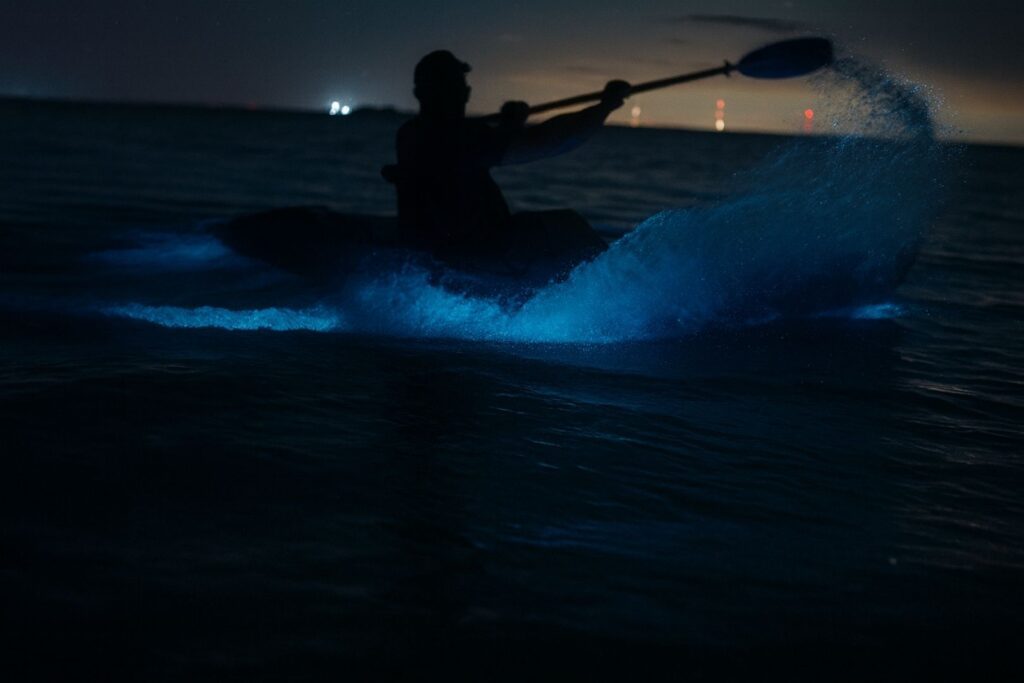
Embarking on a bioluminescence kayaking tour is an adventure that requires a bit of planning to ensure the best possible experience. From understanding the optimal viewing conditions to packing the right gear, a little foresight goes a long way in maximizing the magic of these nighttime excursions.
When considering a tour, think about the comfort of your launch and foot protection. Many tours involve wading into shallow water to launch, so water shoes are highly encouraged. We also recommend checking the weather forecast diligently; while tours often proceed in light rain, heavy storms can lead to cancellations. Most importantly, bioluminescence tours are designed to be accessible, making them a fantastic family-friendly activity, even for beginners. However, understanding booking logistics, especially during peak seasons, is crucial.
Seasonal Shifts and Optimal Moon Phases for Bioluminescence Kayaking Tours
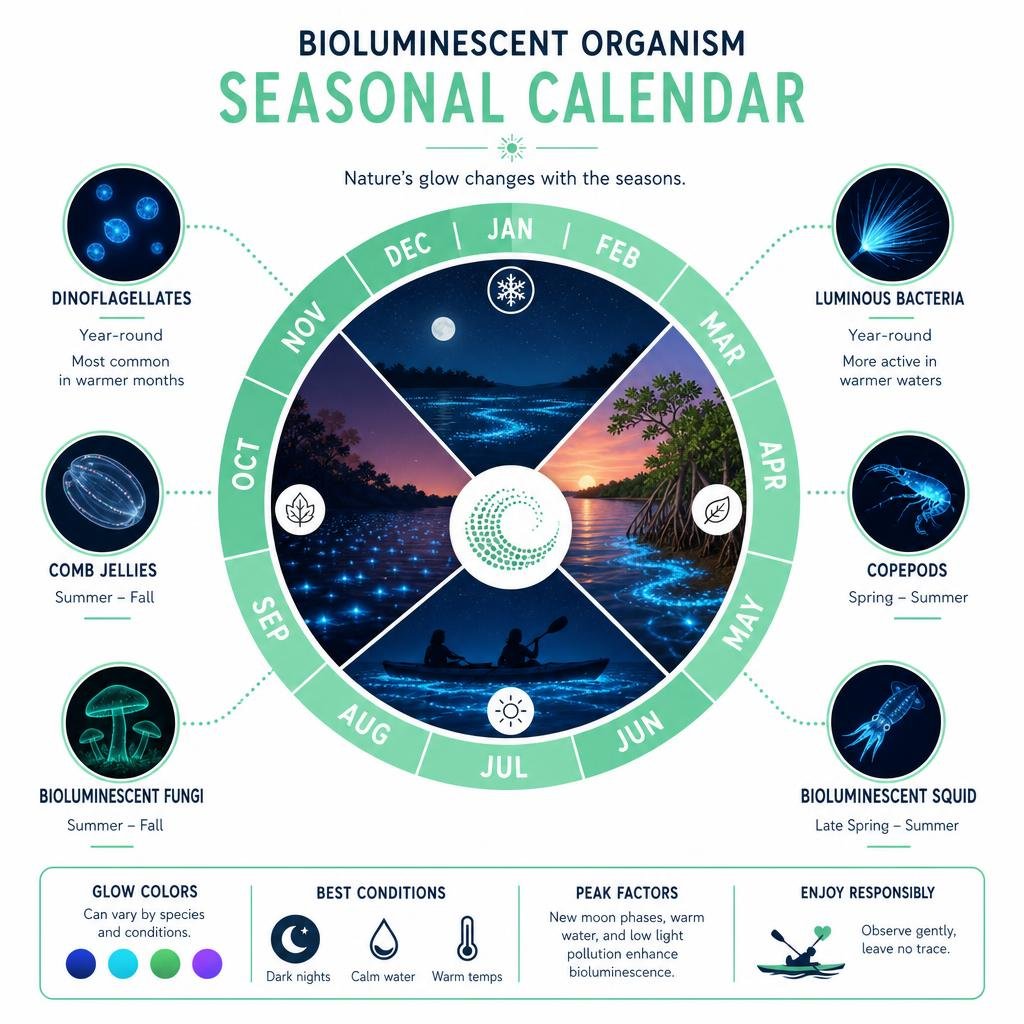
The timing of your bioluminescence tour can significantly impact the intensity of the glow you’ll witness. In Florida, particularly along the Space Coast, we experience two distinct bioluminescent seasons, each offering a unique spectacle.
The summer months, typically from June through October (as of August 2026), mark the peak of the dinoflagellate season. These microscopic organisms, when agitated by movement in the water, emit a brilliant blue-green light. The warmer waters and increased nutrient runoff create ideal conditions for these organisms to flourish, often reaching concentrations of over 100,000 glowing organisms per liter in places like the Indian River Lagoon. This is when the water truly comes alive with every paddle stroke and fish dart.
As the weather cools, from November through March, the winter season introduces us to the comb jellies. These fascinating, gelatinous creatures produce a shimmering, rainbow-like bioluminescence, creating a different but equally mesmerizing display. Unlike dinoflagellates, comb jellies glow continuously when disturbed, offering a more sustained light show.
Regardless of the season, the moon phase is arguably the most critical factor for optimal viewing. The darker the sky, the brighter the bioluminescence appears. Therefore, planning your tour during a new moon phase, when there is minimal moonlight, will provide the most brilliant and vivid display. As the moon waxes and wanes, its light can diminish the perceived glow. Tours are often scheduled around these lunar cycles to ensure participants experience the peak brilliance. Additionally, while less impactful than the moon, tide movements can also play a role, as they influence the concentration and distribution of these glowing organisms in certain areas, affecting seasonal water clarity.
Essential Gear and Safety Preparation for Nighttime Paddling
Preparing for a nighttime kayaking adventure involves more than just showing up. To ensure a comfortable and safe experience, we advise bringing a few essential items.
First and foremost, water shoes are indispensable. They protect your feet from shells, rocks, and other debris during launch and landing, and provide much-needed traction on potentially slippery surfaces. Even if you don’t plan to get out of your kayak, they offer comfort and peace of mind.
Insect repellent is another must-have, especially during the warmer months when mosquitoes can be prevalent. Applying it before you head out will allow you to focus on the glowing waters rather than bothersome bites.
Protective clothing is also important. Even on warm Florida evenings, being out on the water after dark can feel cooler, especially with a breeze. We recommend bringing a light jacket or long-sleeved shirt to stay comfortable.
While guides typically provide necessary safety equipment, a red light headlamp can be useful for personal use before and after the tour, as red light preserves night vision better than white light. However, during the actual bioluminescence viewing, lights are usually turned off to maximize the glow.
Finally, while tour operators provide life jackets, pay close attention to the safety briefings. Guides will cover important information regarding paddling techniques, group protocols, and emergency procedures. These tours are generally conducted in calm, flatwater lagoons, making them accessible even for beginners, but understanding and adhering to safety guidelines is paramount for everyone’s enjoyment and well-being.

What Makes the Indian River Lagoon Ideal for Bioluminescence Kayaking Tours
Florida’s Indian River Lagoon stands out as a premier destination for experiencing bioluminescence, often hailed as one of the brightest locations globally. This expansive estuary, particularly within the Merritt Island National Wildlife Refuge, creates a unique environment where bioluminescent organisms thrive.
The lagoon’s exceptional brightness is primarily due to its high concentration of dinoflagellates, microscopic plankton that emit light when disturbed. Dr. Edith Widder, a renowned marine biologist, has even stated that the Indian River Lagoon offers the best bioluminescence she has ever seen, a testament to its unparalleled vibrancy. The nutrient-rich coastal waters provide an abundant food source, allowing these organisms to multiply to extraordinary levels, sometimes exceeding 100,000 glowing organisms per liter of water. This density ensures that every paddle stroke, every fish dart, and every movement in the water ignites a spectacular, neon-blue glow, transforming the lagoon into a living light show.
Comparing Dinoflagellates and Comb Jellies Across Ecosystems
While Florida’s Indian River Lagoon is famous for its Pyrodinium bahamense dinoflagellates, bioluminescence manifests in various forms across different ecosystems worldwide. Understanding these differences enhances our appreciation for this natural wonder.
Dinoflagellates, like those found in Florida, are single-celled organisms that produce light as a defense mechanism, often described as a “burglar alarm” to deter predators. Their light is typically a bright, fleeting flash of blue-green, triggered by mechanical stimulation. These are common in warm, nutrient-rich bays and lagoons, including Mosquito Bay in Vieques, Puerto Rico, which is globally recognized as one of the brightest bioluminescent bays. Jacob Berkowitz, a traveler, described his experience in Mosquito Bay as feeling “alien” and “Avatar-like,” highlighting the intense, instantaneous glowing effect when he put his hand in the water.
In contrast, comb jellies, or ctenophores, like the sea walnuts found in Florida’s winter months, exhibit a different kind of bioluminescence. Their light is often described as a shimmering, rainbow-like glow that emanates from rows of cilia (comb-like plates) along their bodies. Unlike dinoflagellates, comb jellies tend to glow more continuously when disturbed, creating a softer, more sustained light. These creatures are also found in cooler marine environments, such as the Pacific Northwest. For instance, Port Gamble Bay in Washington State offers two-hour bioluminescence kayak tours, showcasing the unique glow of its local marine life.
Globally, other locations offer diverse bioluminescent experiences. Jamaica’s Luminous Lagoon hosts similar dinoflagellate displays, while the Waitomo Caves in New Zealand are famous for their glowworms, which produce a starry sky effect on cave ceilings. Each location provides a distinct encounter with this fascinating phenomenon, shaped by the specific organisms and environmental conditions present. For those interested in delving deeper into the science behind these diverse forms of marine light, exploring resources like the NOAA Ocean Exploration bioluminescence research can provide valuable insights into how and why these creatures glow.
Nighttime Wildlife Encounters on Space Coast Waterways
A bioluminescence tour isn’t just about the glowing water; it’s also an incredible opportunity for unique nighttime wildlife encounters, especially in Florida’s Space Coast waterways. The dark, tranquil environment of the Indian River Lagoon allows us to observe nocturnal animals in their natural habitat, often enhanced by the bioluminescent glow.
One of the most magical sights is witnessing manatees swimming through the glowing water. As these gentle giants glide beneath your kayak, their movements disturb the dinoflagellates, causing them to light up and create a shimmering “halo” around the manatee’s body. Dr. Edith Widder recounts seeing manatees appearing “haloed in shimmer” as they move through the glowing water, an unforgettable experience.
Dolphins, too, leave spectacular glowing trails as they navigate the lagoon, their sleek forms illuminated by the disturbed plankton. Seeing a dolphin’s path etched in neon blue is a truly breathtaking moment. Mullets, known for their acrobatic jumps, add an element of surprise. These fish, when startled, can leap out of the water, sometimes even into kayaks, creating splashes of light. Dr. Widder has observed mullets jumping into boats, adding an unexpected thrill to the night.
Beyond the aquatic mammals, you might also spot resting sea turtles as they surface for air, or catch glimpses of nocturnal wading birds foraging along the shorelines. Observing these creatures in such an ethereal setting provides a profound connection to nature. It’s important to remember, however, to maintain a respectful distance from all wildlife and adhere to ethical viewing practices to ensure their safety and minimize disturbance.
Comparing Tour Formats: Clear Kayaks vs. Standard Kayaks
When choosing your bioluminescence tour, you’ll often encounter options for different kayak types. The two most common are clear bottom kayaks and standard tandem kayaks, each offering a distinct experience.
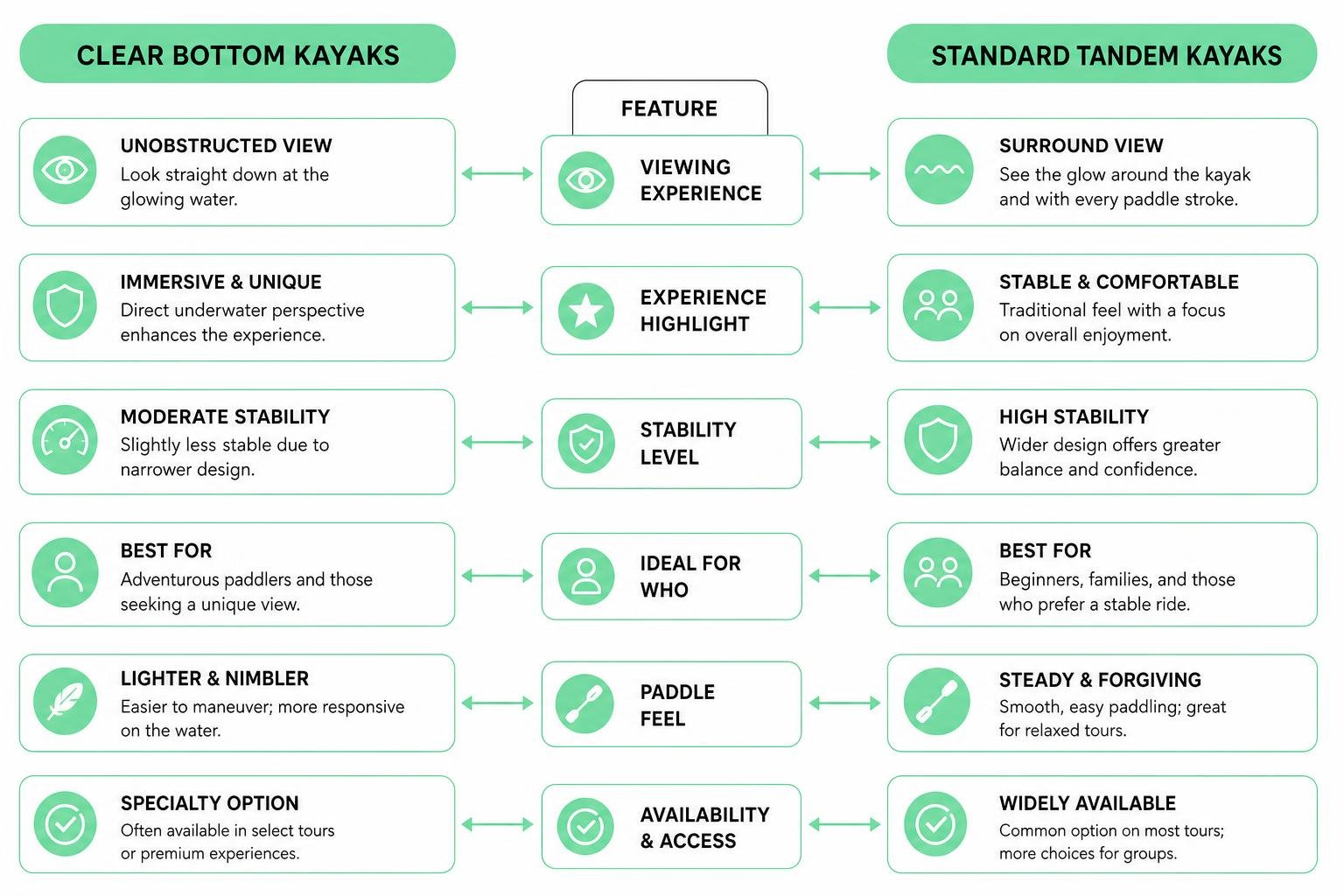
Clear kayaks, as their name suggests, feature transparent hulls, allowing for an unobstructed view of the underwater world. This can be particularly exciting during a bioluminescence tour, as it offers a unique perspective of the glowing organisms directly beneath you. Companies like Cocoa Kayaking in Merritt Island, Florida, offer LED Bio Comb Jelly Clear Bottom Kayak tours, emphasizing this immersive viewing experience. The ability to look straight down into the glowing water can enhance the feeling of being truly immersed in the phenomenon.
Standard tandem kayaks, on the other hand, prioritize stability and ease of paddling. These are typically wider and more forgiving, making them an excellent choice for beginners, families, and those who prefer a more traditional kayaking experience. While they don’t offer the direct underwater view of a clear kayak, the bioluminescence is still highly visible around the sides of the boat and with every paddle stroke. Many tour operators, such as Get Up and Go Kayaking in Titusville, Florida, which boasts over 1,300 five-star reviews, primarily use stable tandem kayaks, focusing on the overall experience and the expertise of their guides.
The choice between clear and standard kayaks depends on your personal preference. Clear kayaks offer a novel, direct visual experience, while standard kayaks provide a stable and comfortable platform for enjoying the wider spectacle of the glowing waters. Regardless of the kayak type, experienced guides will always optimize the route selection based on factors like wind direction and the best locations for bioluminescence, leveraging their local waterway expertise to ensure a memorable tour.
Choosing Guided Bioluminescence Kayaking Tours Over Independent Paddling
While the allure of exploring bioluminescent waters independently might be tempting, opting for a guided tour significantly enhances the experience and ensures safety, especially when navigating unfamiliar waterways at night.
Guided tours provide unparalleled nighttime navigation safety. Professional guides are intimately familiar with the local waterways, including currents, shallow areas, and potential hazards that are invisible in the dark. They have the expertise to evaluate localized wind and tide conditions, adjusting routes as necessary to ensure a smooth and safe journey. This local knowledge is crucial for finding the high concentration pockets of bioluminescent organisms, ensuring you witness the most vibrant displays.
Beyond navigation, guides implement comprehensive safety protocols. This includes providing high-quality equipment, conducting thorough safety briefings, and offering instruction on proper paddling techniques. For beginners and families, having an experienced guide lead the way minimizes stress and allows everyone to fully immerse themselves in the natural wonder without worrying about logistics or safety.
Moreover, guided tours often operate in small groups, fostering a more intimate and educational experience. Naturalists leading these tours provide educational briefings, explaining the science behind bioluminescence, the types of organisms you’re seeing, and the ecology of the surrounding environment. This invaluable insight transforms a simple paddle into a deeper understanding and appreciation of nature. Operators like BK Adventure, with over 10 years of experience and thousands of 5-star reviews, exemplify the value of professional guidance, ensuring both safety and an enriching educational component that independent paddling simply cannot replicate.
The Science Behind Marine Bioluminescence
The magical glow we witness during a bioluminescence tour isn’t magic at all, but rather a fascinating natural chemical reaction. Bioluminescence is a form of chemiluminescence, meaning it’s light produced by a chemical reaction within a living organism.
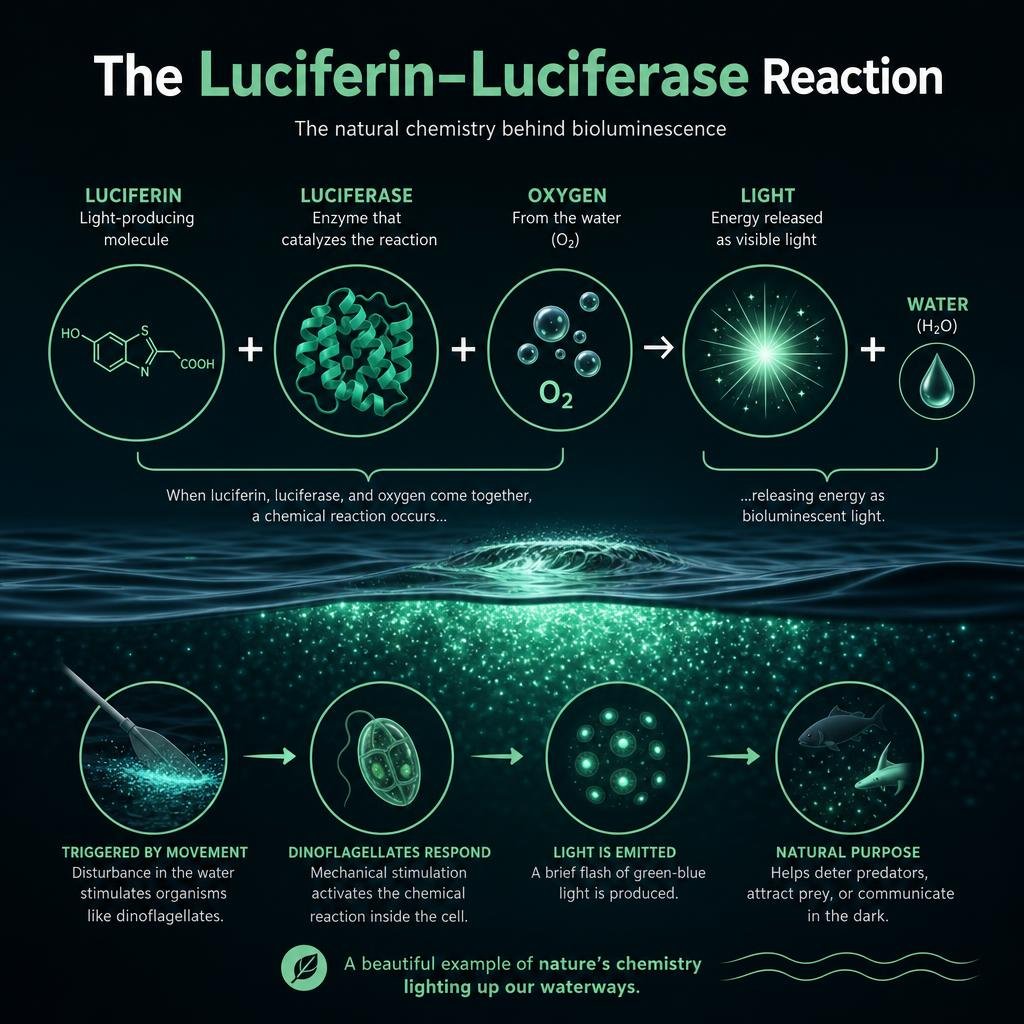
At its core, the mechanism involves two key chemical components: luciferin and luciferase. Luciferin is the compound that produces the light, and luciferase is an enzyme that acts as a catalyst, speeding up the reaction. When oxygen is introduced to luciferin in the presence of luciferase, it oxidizes, releasing energy in the form of light. This process is remarkably similar to how a glow stick works, just that the chemicals are produced by the animals themselves.
In the case of dinoflagellates, the light is typically triggered by mechanical stimulation—any movement in the water, such as a paddle stroke, a swimming fish, or even a boat’s wake, causes them to emit a brief flash of light. This is often a defense mechanism, acting as a “burglar alarm” to startle predators or attract larger predators to eat the smaller ones that are attacking them.
Bioluminescence is an evolutionary marvel, having evolved independently at least 50 separate times across evolutionary history. This widespread development underscores its importance for survival in various environments. In fact, approximately 75 percent of animals in the open ocean environment produce bioluminescent light. In the deep sea, where sunlight is scarce, bioluminescence is a vital form of communication, used for everything from predator distraction and camouflage to warning signals and attracting mates. For instance, fish can leave glowing trails like comets when swimming through bioluminescent water, a testament to this incredible adaptation.
Frequently Asked Questions About Bioluminescence Tours
What is the best month to see bioluminescence in Florida?
Florida offers a year-round opportunity to witness bioluminescence, but the type and intensity of the glow vary by season. The peak season for dinoflagellate bioluminescence, which produces the vivid blue-green flashes, runs from June through October. During these warmer months, the conditions are ideal for these microscopic organisms to proliferate, leading to the brightest and most widespread displays.
As the weather cools, from November through March, the focus shifts to comb jellies. These gelatinous creatures create a different, often iridescent, shimmering glow. While perhaps not as bright as the dinoflagellate blooms, the comb jelly season still offers a beautiful and unique bioluminescent experience. Therefore, while you can find a glowing display almost any time of year, we generally recommend aiming for the summer months for the most spectacular dinoflagellate show. Always remember to align your visit with a new moon phase for the darkest skies and maximum visibility.
Are bioluminescence kayaking tours safe for beginners and children?
Absolutely! Bioluminescence kayaking tours are designed to be safe and enjoyable for participants of all experience levels, including beginners and families with children. Tour operators prioritize safety and accessibility, which is why most tours are conducted in calm, flatwater lagoon conditions, minimizing any challenges related to currents or waves.
Most tours utilize stable double kayaks, which are inherently more stable than single kayaks, providing a comfortable and secure platform for paddling. Professional guides provide comprehensive instruction on basic paddling techniques, ensuring everyone feels confident on the water. They also ensure that all participants are fitted with appropriate personal flotation devices (life jackets) and provide safety briefings before launching. The minimal paddling experience needed means that even those new to kayaking can easily participate and enjoy the magic of the glowing waters. Many tour operators specifically cater to families, making it an unforgettable and safe outdoor adventure for all ages.
How far in advance should night kayaking tours be reserved?
Given the popularity of bioluminescence tours, especially during peak seasons and around the new moon window, we strongly recommend booking your tour well in advance. To secure your preferred date and time, particularly if you’re targeting a specific new moon cycle for optimal viewing, booking two to three weeks ahead is a good practice. During the busiest summer months or holiday periods, it might even be wise to book a month or more in advance.
It’s also important to familiarize yourself with the tour operator’s weather cancellation policies. While tours often proceed in light rain, severe weather conditions like thunderstorms will lead to cancellations for safety reasons. Reputable operators will offer seamless rescheduling options or full refunds in such cases. Booking in advance not only guarantees your spot but also provides peace of mind, allowing you to focus on the anticipation of an unforgettable glowing water experience.
Conclusion
Embarking on a bioluminescence kayaking tour is more than just an outing; it’s an unforgettable night eco-adventure that connects you with nature in a truly profound way. From the vibrant blue flashes of dinoflagellates to the shimmering glow of comb jellies, these tours offer a unique spectacle that transforms familiar waterways into otherworldly landscapes. By venturing into the dark sky environment of places like Florida’s Indian River Lagoon, we not only witness a breathtaking natural phenomenon but also foster a deeper appreciation for nature conservation and the delicate balance of the Space Coast ecosystem. We hope this guide inspires you to experience the magic of bioluminescence for yourself and create memories that will glow long after the night is over.
About Josh Myers
As the owner of Florida Adventurer, I’ve dedicated my career to sharing the wonders of Florida’s natural environments. With extensive experience as a local Space Coast guide, I possess deep waterway navigation authority and expertise in night paddling safety. My passion extends to marine ecology education, ensuring every tour is not just an adventure, but also an insightful journey into the heart of our ecosystems.
About Florida Adventurer
Florida Adventurer is a premier Space Coast eco-tour operator, specializing in small-group guided kayak trips. Our mission is to provide immersive and educational experiences, led by local naturalists who are passionate about the environment. We are deeply committed to environmental stewardship, striving to inspire a love for nature and promote responsible outdoor practices.
Book Your Space Coast Kayak Excursion
Ready to witness the magic? Reserve your night tour spot with us today! Our online scheduling system makes booking easy, and we provide real-time guide updates to keep you informed. Prepare for an unforgettable glowing water experience that will light up your memories for years to come.
Last Updated on August 19, 2026
