
A trip to Egypt can be wonderful and exhausting in the same afternoon. The temples are extraordinary, but the heat is real, the distances are long and the midday crowds can test anyone’s patience. That is why the travelers who come home happiest are rarely the ones who saw the most. They are the ones who planned for comfort: a driver waiting at the right gate, a guide who keeps the group small, a hotel in the right neighborhood and an afternoon set aside for rest.
If you are wondering how to get that balance right, it helps to see how a higher-comfort trip is usually put together. Reading through a few itineraries for Luxury Egypt Tours shows the pattern clearly: private transfers instead of shared coaches, fewer stops per day, longer breaks after lunch, and hotels chosen for location rather than star rating. You do not need to copy any plan exactly, but it makes a useful checklist for designing your own.
This guide covers the decisions that shape comfort most: guiding, where you stay, how you travel on the Nile, and how you handle food, heat and crowds.
Private Guides and the Value of Pacing
A good guide changes how a site feels. Egypt’s temples and tombs are layered with history, and a trained Egyptologist can turn a wall of carved reliefs into a story you actually follow. Before you book, ask to see the guide’s license and confirm they are authorized for the sites on your route. Reputable operators will share this without hesitation.
Pacing matters just as much as expertise. With a private guide, you can start at opening time, skip a stop that does not interest you and stay longer where something does. Group tours work well for budget and company, but they follow a fixed timetable. To choose between them, think about how you handle waiting, walking and heat, and pick the format that fits you rather than the one that looks better on paper.
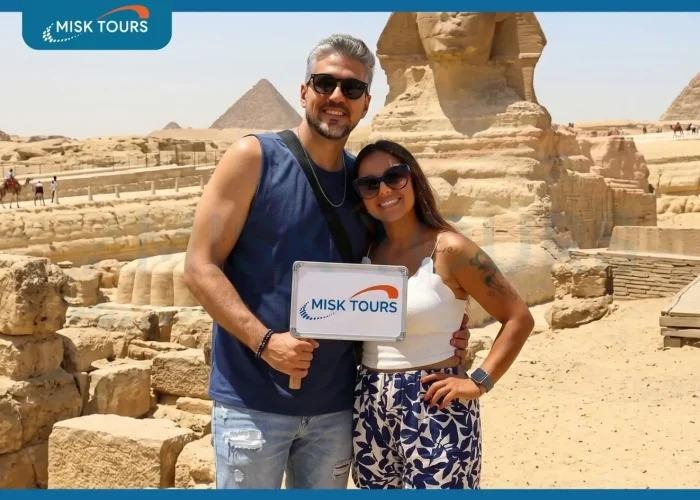
If you are unsure how much to fit into a day, comparing sample itineraries is a simple benchmark. Operators such as Misk Tours publish day-by-day plans that show how many sites are usually combined, which helps you judge whether your own schedule is realistic. As a rule of thumb, two major sites a day is a sensible limit in summer, and three is workable in winter when transfers are short.
Choosing Where to Stay
In Egypt, location often counts for more than room size. In Cairo, staying near Giza gives you early access to the pyramids and some rooms have direct views, but the area is further from the restaurants and galleries of Zamalek and downtown. Many travelers split their stay, with one or two nights near the plateau and the rest in a central neighborhood, so the trip includes both the ancient and the modern city.
In Luxor, the choice is between the east bank, where Karnak and Luxor Temple are close and the town is lively, and the west bank, which is quieter, greener and closer to the Valley of the Kings. The east bank suits those who like walking in the evening, while the west bank suits those who want peace and a farmland view. In Aswan, riverside properties and historic hotels on the cliff give the best outlook, and many have terraces that are ideal at sunset.
A few practical questions are worth asking any hotel before booking. Is there a pool and shade at midday? Does the room have working air conditioning and a quiet position away from the road? Is breakfast included and served early enough for sunrise starts? Is airport or station pickup available? These details affect daily comfort more than any list of facilities.
Traveling on the Nile in Comfort
A Nile cruise is one of the most relaxed ways to cover Luxor, Edfu, Kom Ombo and Aswan, because you unpack once and the sites come to you. The trade-off is that cruise quality varies a lot, from basic river boats to ships with spacious cabins, large decks and multiple dining options. Understanding the differences before you commit saves disappointment later.
Start with the cabin. Larger cabins with picture windows or balconies make a big difference over four nights, especially if you plan to rest in the afternoons. Then look at the dining arrangements, whether excursions are included, and how long the ship actually spends at each stop. Some itineraries sail overnight and visit temples in the morning, while others pause during the day. Guest reviews from the same season you plan to travel are more helpful than general ratings, and curated lists of the Best Luxury Nile Cruises can give you a useful starting shortlist to compare against your own priorities.
If a ship feels too large or too social, smaller dahabiyas offer a slower and quieter experience with only a handful of cabins. They have simpler facilities and less predictable schedules, which suits travelers who value silence over amenities. Whatever you choose, check the direction of travel, because Luxor to Aswan and Aswan to Luxor can change how crowded the temples feel at your visiting time.

Food, Water and Staying Well
Egyptian food is one of the pleasures of the trip. Grilled meats, fresh bread, stuffed vegetables, lentil dishes and sweet pastries are widely available, and most hotel and restaurant kitchens that cater to visitors are careful with hygiene. Still, a few habits help: drink bottled or filtered water, wash or peel fresh fruit, and choose busy places where food is cooked to order.
Sun and dehydration cause more problems than food. Carry water at all times, take regular shade breaks, and avoid heavy meals just before a long outdoor visit. A hat, light long sleeves and sunscreen are sensible even in winter. If you are sensitive to heat, plan your most demanding visits for early morning and keep the middle of the day for museums and meals.
Timing Your Visits Around the Crowds
The most famous sites are busiest between mid-morning and early afternoon, when tour groups arrive. Reaching the pyramids or Karnak at opening time often means better light, cooler air and clearer photographs. Late afternoon is another quiet window, especially at open-air temples where the stone turns golden as the sun lowers.
Weekdays are usually calmer than weekends, particularly at Cairo’s museums and parks, where local families also visit on days off. Public holidays and school breaks can raise crowd levels, so check the calendar when choosing dates. It is also worth remembering that major sites can adjust access for restoration or special events, so confirm opening arrangements close to your date.
Spending Where It Counts
A comfortable trip does not require spending more on everything. It works better to choose two or three areas that matter most to you and be modest elsewhere. For many travelers, the best value comes from a private guide for the pyramids and Luxor, a good room in a convenient location, and a well-reviewed Nile vessel. Meals, souvenirs and short taxi rides can stay simple without affecting the experience.
Build a small buffer into your budget for tips, entry fees to optional sites such as certain tombs, and unplanned extras. Keep small banknotes handy, because tips are customary and change is not always easy to find. Travel insurance that covers medical care and cancellations is a low-cost way to protect the rest of your spending.
Final Thoughts
Comfort in Egypt comes from a handful of choices made carefully rather than from doing everything at the highest level. Pick a pace you can enjoy, stay where the location helps your plans, take the Nile slowly if you can, and protect yourself from the heat and the crowds. With those pieces in place, the monuments and the people you meet along the way are free to be the highlight, which is exactly how a trip to Egypt should feel.
Last Updated on October 14, 2026
