
If you have been around long enough, you should know that my family is very sporty, my kids and husband are climbers, but a few years ago, my husband had an accident where he basically destroyed his foot, had massive surgeries, and even lost an entire size on his left foot. Back then, I didn’t realize how helpful insoles are, and yes, being sporty has pushed me to test a few of them, but I never processed the real benefits of those until my husband’s accident and how these insoles really help him.
Being a mom of climbers means walking long distances, standing for hours, beside the time I take for myself, which is running or walking at least 15 to 20 miles a week. Lately, I’d been feeling that mid-run fatigue and an ache in my arches. It wasn’t enough to stop me, but it was annoying enough to make me wonder if a better insole could help.
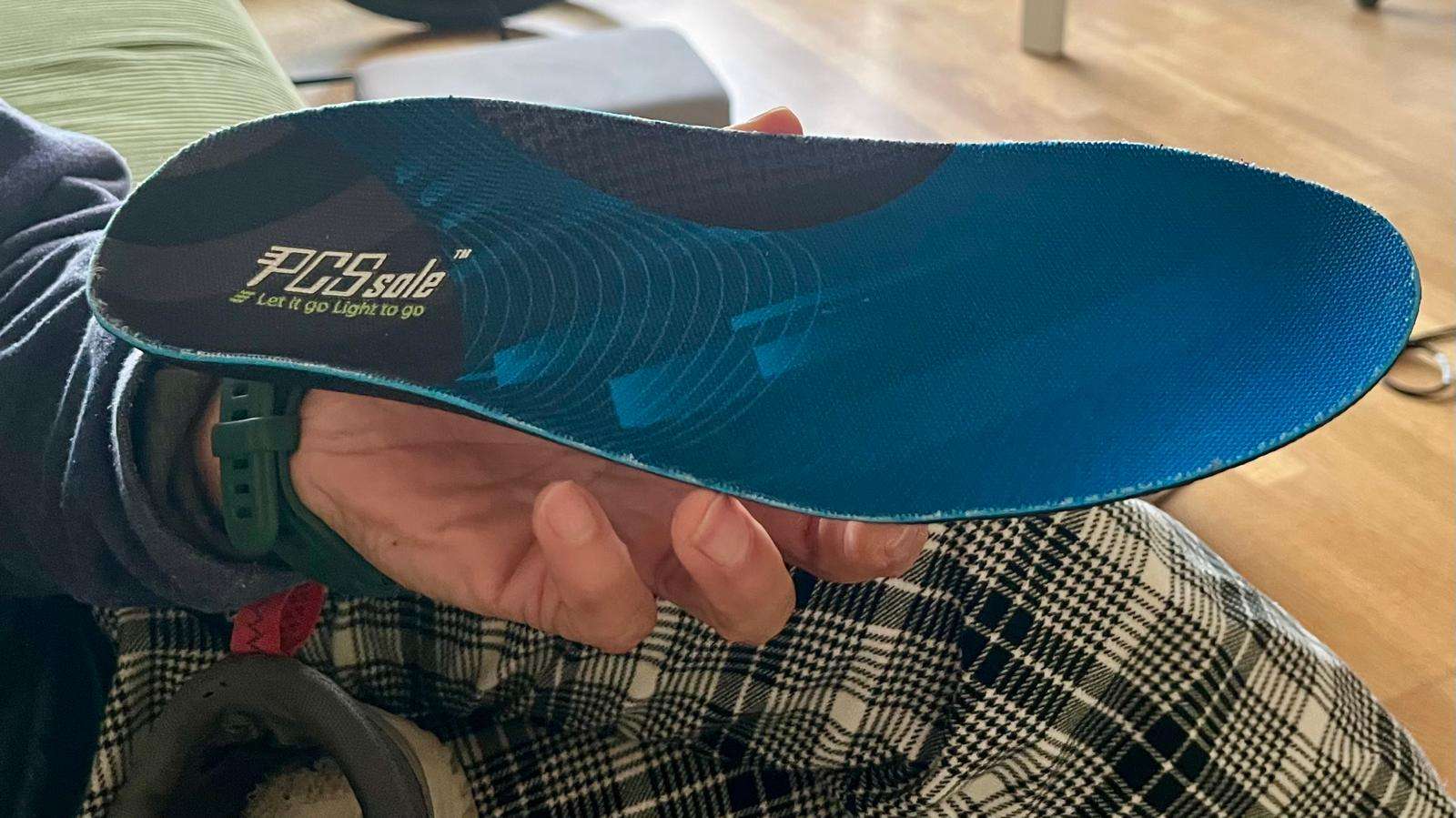
That’s how I ended up testing the PCSsole Running Flexible Performance insoles. They promised better support, comfort, and energy return, but did they really deliver?
Key features of the PCSsole Running Flexible Performance Insole
But first things first, the key feature they offer. For anyone checking their page and wondering what that is or what this is, I will quickly run down what they offer. So, from the specs:
- The insoles have a deep U-saped heel cup, which is amazing because this means that your foot is cupped or “like wrapped” in the back, this will keep the heel bone more balanced. Good points for stability.
- For the arch, the insoles offer a semi-rigid high-arch support. This means that the insole will fill the gap between the foot’s arch and the ground, which is a blessing when it comes to preventing pain in the heel and ball of the foot. Good points for redistributing pressure.
- The insole is made of durable EVA foam as the base with multiple layers of cushioning, and a top layer of breathable, non-slip fabric. This is important too because it combines comfort + moisture/slide control.
- It’s marketed as multi-sport (running, basketball, volleyball, tennis, pickleball) — so the brand is saying: this insert works across different foot movements.
- Sizing is broad; you won’t have issues sizing those up. They even have a custom size chart. That makes it accessible for many foot sizes.
- The price is competitive with other brands. PCSsole has positioned this insole as a mid-price, supportive, multipurpose upgrade rather than a bare minimum or ultra-premium custom orthotic, which is perfect for everyone.
So basically: if you run, do multi-sport, or just want a better in-shoe feel with some support, this product is targeted at you.
My experience: setup and first impressions
Now, one thing is what is offered, and the other is what we feel with it. As for first impressions, putting them into one of my everyday shoes, here’s what stood out:
First, the heel cub, it’s noticeable and it’s one of the things you will feel different. When I slid my foot in, I felt the back of the foot like packed in a good way, a lot more than with a regular insert.
That gives an immediate sense of “defined” support rather than just stuffing your foot or “foam underfoot.”
Second, the arch, because of the semi-rigid arch support, the midfoot felt a little firmer than the standard stock insole I had. If I compared it to a purely soft insert, this one felt more structured, and you can feel the difference when you step with your foot.
The overall first impression and feeling on foot is quite good. The materials feel nice, the features are definitely there, and you will notice it right away. I noticed a difference in how snug the shoe felt after inserting it, nothing major, but obvious, since the insoles are bigger than a normal one.
This is when the trim-to-fit nature (as many insoles are) comes to play; this means that you might have to remove the original insole (or stack, depending on shoe space), and check that your toe box/head-room is still fine.

How it performs: running, multi-sport and stability
The most important part, how it actually performs, and the answer to “does it actually deliver what it offers?”.
Walking, stepping, every day: The first thing I did was just go out and about my day like normal, and on initial steps, the cushioning felt more than competent. It wasn’t like a plushy but an actual good support under my foot, and this was even more noticeable on each step at heel strike as well as mid-foot.
The upper fabric layer of the insole felt fresh and dry, even after an hour of being out under Barcelona’s sun and heat.
When it comes to my foot sliding, which is some I HATE, my foot didn’t slide around too much in the shoe. Even with sweaty feet, which makes things even more slippery, there’s no major move in there. You can feel the difference.
Running: For a moderate jog, the insole did what the brand claimed without major issues. The heel felt stable, the arch felt held, and I had a lot less “foot wobble” than usual.
On longer runs, the cushioning held up surprisingly well, and even more surprisingly, the EVA foam kept its bounce pretty well (EVA foam sometimes flattens out after a few miles, which is its normal behavior).
Stability: Now, this is where the insole shines big time. If you have a tendency for ankle roll, like me, or you like your shoes to feel “locked in,” this insert gave a noticeable improvement. It didn’t cure everything (if your shoe is too loose or your biomechanics are off), but it added a really helpful layer.
Overall performance: The insole delivers what it offers, and by the end of the week, I realized that I wasn’t thinking about my feet anymore. No more mid-run arch fatigue. No heel soreness the next morning. And that, to me, is the biggest compliment you can give an insole.
The insole does a great job of cushioning your feet and giving you that much-needed stability. Something that I really appreciate is that they didn’t make my shoes feel cramped. Some insoles can lift your foot too high, and that messes up the whole fit.
But that doesn’t mean they are not cushioned, the insole has a good balance: it’s cushioned but it’s not bulky.
Note for first-time users: Because the insert has more structure (especially arch and heel cup), you might feel it more than a very soft insert, which, for some, that’s a plus, but for others, it may take some tear-and-wear to get fully comfortable.

Strengths and weaknesses: what it does well, what to watch
While the pros are kinda obvious, I want to highlight some of the most noticeable pros and cons I noticed after wearing those insoles:
Pros:
- Strong stability.
- Good quality materials for the price point.
- A wide size range.
- It’s highly versatile.
- The sale price (~$36) for what you get is amazing.
Cons:
- If you have low arches (flat feet), the semi-rigid high arch support might feel too firm or may not align with your foot’s natural shape.
- Because it adds structure, it might change how your shoe fits.
- Like most insoles, despite using materials that look solid, the durability on long-term wear is still unknown, but it can easily last months.
- If your shoe or foot already feels very snug or you have little extra room in your shoe, adding a structured insole can cause fit issues.
Conclusion
If I were to boil it down, I would say that the PCSsole Running Flexible Performance Insole is a strong mid-level insert that delivers what it offers. You will get several months of better stability and more support. This, on top of the good materials, non-sliding feature, how versatile the insole is, and the price, gives you an amazing upgrade from your regular insoles. You will notice the difference, just be careful with the type of shoe you use it with, and take into account the fitting.
Last Updated on November 11, 2025
