
The East End of Long Island stretches out into two slender fingers of land, the South Fork and the North Fork, each with its own pace and personality. Travelers come for the beaches, the farmland, and the way the light falls across the water in late afternoon.
This guide pulls together what you actually need to know before going: how the geography works, when to visit, and how to plan a trip that feels relaxed rather than rushed.
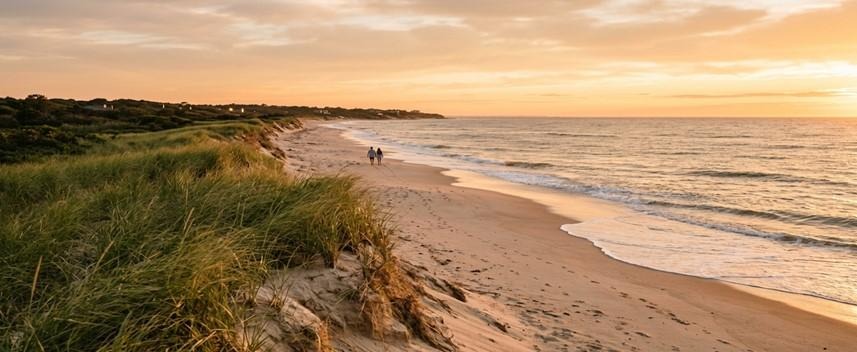
Understanding the Two Forks
The South Fork is the more famous of the pair, home to villages like Southampton, East Hampton, and Montauk. It has the cinematic ocean beaches, the cedar-shingled cottages, and a polished restaurant scene that pulls visitors from Manhattan most summer weekends.
The North Fork has a slower rhythm. Think working farms, oyster beds, and small wineries along Route 25. It draws people who want quiet mornings, farm stands, and tasting rooms rather than crowded sidewalks.
Plenty of travelers split their time, basing themselves on one side and driving across Shelter Island or the North Sea ferry for a day on the other.
When to Go
Late spring and early fall are the sweet spots. May and September bring warm afternoons, cool evenings, and a fraction of the August traffic. The beaches stay swimmable into late September, and farm stands hit their peak in early autumn.
July and August are the lively months, when the towns hum with events, gallery openings, and farmers markets. Restaurants book up weeks ahead, so planning matters more in high season.
Winter and early spring are quieter still. Some shops close, but the landscape turns wide and windswept, which has its own appeal for travelers who want time to slow down.
Where to Base Yourself
Sag Harbor offers a walkable village with a working harbor, good bookstores, and easy reach to ocean and bay beaches alike. East Hampton has the history and a tighter cluster of restaurants. Montauk feels rougher around the edges, with surf shacks and a lighthouse at the tip of the island.
On the North Fork, Greenport is the obvious anchor town. It has a carousel on the waterfront, a small ferry over to Shelter Island, and a walkable Main Street that empties into the bay.
For longer trips, many travelers look for places to unwind on the East End that put them within reach of both the ocean and the vineyards without locking them into one side of the island.

How to Get Around
A car makes the trip easier. The Hampton Jitney runs from Manhattan and is comfortable, but once you arrive, the towns are spread out and the back roads are part of the pleasure. Bikes work well around villages like Sag Harbor and Greenport, less so on the longer stretches between them.
If you take the Long Island Rail Road, you can hop off in Southampton or Greenport and rent a car at the station, which keeps the driving short and the views long.
Things Worth Building Into the Itinerary
Start a morning at the Montauk Lighthouse, then drift back west for lunch at a roadside lobster shack. On the North Fork, stop at an oyster farm tasting room, then a vineyard, then a sunset on Long Beach Bay.
Sag Harbor’s Whaling Museum is worth an hour on a rainy afternoon. The Parrish Art Museum near Water Mill has a quiet rotating collection and a long, low building set into the fields.
Leave room in the schedule for nothing in particular. The East End rewards travelers who pull off the road for a farm stand, a pond, or a dirt path down to the water that was not on any map.
Bring the Right Mindset
The biggest mistake first time visitors make is treating the East End like a checklist. The towns are charming, the beaches are wide, and the vineyards are good. None of it needs to be rushed.
Build your itinerary around two anchored point
Last Updated on June 5, 2026
