
Murano, famous for handcrafted glass, is a collection of seven small islands connected by eight bridges off the coast of Venice. It is 1.5 km (just under 1 mile) from Venice and can easily be reached by vaporetto – a public ferry boat circulating on a schedule through Venice’s canals and its outlying islands. Although it gets busy in the summer with visitors to the glass factories, shops, and the Glass Museum, it remains less hectic and more authentic than Venice.
The island has been humming with industrial and commercial activity since the fourteenth century, thanks to its glass-blowing workshops. Glassworking on the island goes back to 1291, when all the glass furnaces were moved there from Venice, and all the master artisans and their families relocated. Through the ebbs and flows of history, Murano, Italy, managed to remain relevant to this day and retain much of its authentic workaday island aura.
What Life Was Like on Murano Centuries Ago
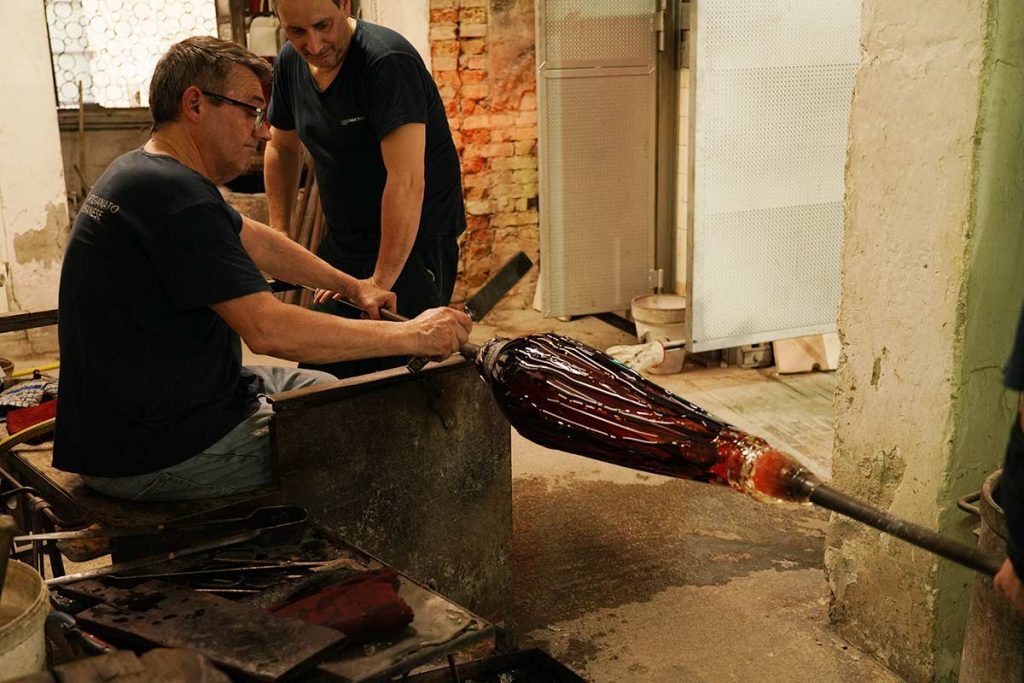
After the glass industry moved here, Murano soon became the center of glassmaking in Europe. By the 16th century, around 3,000 of its approximately 7,000 population were glassmakers. They led a privileged life, often living like aristocrats, with their daughters even having the opportunity to marry Venetian nobility. However, the glassmakers were not allowed to leave the island, mainly to protect the secrets of their trade. As a result, the people of Murano became a close-knit community.
Life was quiet on the island, with those not working in the glassmaking industry being involved in fishing, salt production, and farming. Compared to Venice, it was a working island with a slower pace of life, though filled with the heat and smoke of the furnaces.
The art of glassmaking was passed from generation to generation, with boys as young as 11 or 12 starting their training in their fathers’ or uncles’ furnaces. The whole family, from children to grandparents, often worked in the workshops, fulfilling different functions.
There was a decline in glassmaking in the 18th century with the fall of the Venetian Republic. Napoleon Bonaparte captured the Venetian Republic, abolished all guilds in 1797, and by 1820, only five furnaces on the island remained active. Life became very difficult for the Murano locals, as glassmaking had been the main source of income. Some glassmakers left the island, seeking opportunities elsewhere and taking their secrets with them. This led to international competition.
Changes in Murano in the mid-19th and 20th Centuries
A few glassmakers, such as Antonio Salviati, tried to keep the art alive during the period of decline, and there was a dramatic comeback starting in the middle of the 19th century. Ancient techniques were revived, and new styles were later adopted, such as Art Nouveau and Art Deco. A glassmaker school was created so that artisans could relearn popular old techniques, such as Millefiori and Filigrana. Eventually, Murano regained international fame as the global center of art glass, but remained a closed community, with the inhabitants still living a small-village life.
There was some tourism, but it wasn’t until after World War II that there was a real boom with travelers wanting to see Venice and, with it, explore its lesser-known sides, such as how handcrafted glass is made and to purchase authentic pieces. Life in Murano started to change.
Murano, Italy, Today
Murano is different today from what it was centuries ago. It is a premier tourist destination even though there aren’t nearly as many furnaces as in its heyday. Estimates say that between 400 and 600 people now work in the industry. This decline is thanks to many of the younger generation rejecting the intense manual labor of glassmaking. Despite this, Murano Glass is still internationally acclaimed, and the island is now the most popular day excursion from Venice for the millions of tourists who visit Venice every year.
So, is Murano just a tourist spot now? If you just go for the day and stick to the main streets and canals filled with showy glass shops, you may be inclined to think that it is. But stay a night or two, or wander off the main streets, and you will discover another side to the island, which is not that much different from what Murano used to be.

The Tourist Attractions in Murano
When you get on the vaporetto to Murano, especially in the summer, before you even disembark, you will realize how popular this destination is among tourists. Once you get off, you will quickly become a part of tourist crowds, and it can get very busy. The pace of life is not as fast as in Venice, but it is still hectic. Maybe think of visiting in the spring or autumn, when it will be less crowded
If you are there just for the day, you will probably want to see as much of the glassmaking industry as possible, and the best place to start is the Murano Glass Museum.
The Murano Glass Museum
The Murano Glass Museum (Museo del Vetro in Italian) opened in 1861 to help preserve Venetian glass heritage and explain the art and craft of glassmaking in Murano to local visitors. It is located in the historic 17th-century Palazzo Giustinian, which was once the residence of the bishops of Torcello. It is a must – see on the island as it depicts the history of Venetian glassmaking. Here you will find the world’s best collection of Venetian glass, showing, in chronological order, everything from Roman era glassware to modern glass artwork. Admire intricate Medieval goblets, 15th-century chandeliers, and modern sculptures. There are detailed exhibits explaining the different techniques step-by-step and showing how they have evolved. Make sure to set aside at least an hour and a half for visiting the museum.
Glass Factories
Glass factories are another must-see on the island. Many open their doors to the public and offer tours and glassblowing demonstrations. You will see how the process of creating glass works and how it is coordinated by different artisans. Everybody has a specific job to do, and they work together in harmony. Some factories have shops where you can buy pieces of glass art produced in the factory.
Glass Shops
There are many glass shops on Murano selling everything from small trinkets to vases, sculptures, and mirrors. Spend time browsing the different stores so that you can appreciate the various styles, designs, and craftsmanship. Compare prices and don’t be rushed into buying anything.
A good place to shop is the Fondamenta dei Vetrai, Murano’s main street, situated by the main canal. Here you will find glass shops and art studios, as well as cafes where you can stop for a well-earned break. However, you should also venture down some of the side alleys where you’ll find small family-run studios. Here you may find better prices and original Murano Glass artwork.
Where to Eat on Murano
You won’t go hungry or thirsty on the island. With the rise in tourism, there are plenty of cafes, trattorias, and restaurants where you can linger over a coffee, a glass of wine, or a delicious fish dish.
Many of the restaurants are outstanding in the quality of the food and the atmosphere. For example, the Trattoria Busa alla Torre da Lele (Campo Santo Stefano Murano 3) serves traditional Venetian dishes, specialising in freshly caught fish. It is well worth eating there, because, as well as delicious food, it is housed in a historic medieval tower.
If you want to escape from the crowds and eat with the locals, head to Restaurant alla Vecchia Pescheria (Campello de la Pescheria 4). It is tucked away from the tourist area, so you can enjoy a little quiet time.
Although many people visit for the day, it is well worth staying on the island. Evenings are quieter so you get a chance to see the real Murano, one more like it was centuries ago.
The best hotel among the few on the Island is the 4-star Hyatt Centric Murano Venice. It is easy to get to from Venice as the Murano Museo vaporetto stop is in front of the hotel. It is an intriguing building because it used to be a glass factory. Inside, you will see that Murano glass lamps and mirrors grace the ceilings and walls.
Another hotel housed in a former glass factory is the 4* NH Collection Murano Villa. It has even kept the original furnace. The hotel is just 180 m (591 ft) from the Glass Museum.
You can also find apartments for rent in the streets behind the tourist area so if you want to mix with the locals, this is the place to go.
The Real Life on Murano Island
Beyond the tourist attractions, if you make it your goal, you can still experience the close-knit community that still exists on Murano. The pace of life is slower, and as you wander in the back alleys, a different world opens up. Stop at a coffee shop where you can observe the locals and their slow enjoyment of life. Walk by the quiet canals and come across people whose families have been in the glassmaking industry for generations.
Amongst the traditional ancient buildings, you won’t find enormous supermarkets, but small shops, like a butcher’s, a fish shop, and a tobacconist, just like you used to see in your hometown in the old days. They still thrive on Murano because that’s where the locals prefer to shop. Shopping here is no less a social activity than a trip to stock up the fridge. Cars aren’t allowed on the Island, so there is no heading off to the supermarket and filling your car up with goods for the week. Instead, the residents walk to local shops, meeting neighbors and chatting along the way. There is a food co-op where they can buy bottled and canned products, but again, everything has to be carried or rolled in little wheeled grocery bags.
Children have different lives living on such a small island. It is a simpler life as they don’t get bundled into a car to go off on outings. They play out in the streets as we did in the past. There is an elementary school on the island, but older children have to get on a vaporetto and go to school in Venice.
On Sundays, the locals come out for a walk, meeting neighbors, chatting, cooing over babies, lovers sitting by one of the canals. After Mass, they will go to a trattoria to enjoy a leisurely lunch with a glass or two of wine.
The people of Murano are not, however, cut off from the rest of the world. Wi-fi reception is good, everyone has a cell phone, there are satellite dishes, and DHL shipments come by vaporetto. And of course, they can take a short ride on the vaporetto to a much more hectic Venice.
So, How Has Murano, Italy Changed
Murano is an island that has two sides, the tourist one and the real one. Its real workaday side has not changed much in the last few centuries. With no cars, slow pace of life, and a tight-knit community, Murano, Italy, is one of the few remaining places where life barely changed. If you have time and patience, and a desire to see the past without the use of a time machine, you can do that here. Enjoy the glass shops, galleries, glass factories, and the museum. Maybe stay at a 4-star hotel, or rent an authentic Murano apartment through many online apartment rental services. Most importantly, take your time to walk the back alleys, shop in small local stores, visit small traditional trattorias and bars with no frills, amazing fresh food, and good Italian wine, and understand how locals have been living here for hundreds of years.
Last Updated on January 28, 2026
