
I’ve been camping for years, but it wasn’t until a rainy morning somewhere off Highway 101 that I realized I’d been doing it the hard way the whole time. I was crouched next to my Tacoma, trying to stuff a wet tent into its bag without soaking everything else in my trunk, and I remember thinking: my truck is right here. Why am I still sleeping on the ground?
That thought turned into a few months of research, a couple of gear purchases, and eventually a completely different way I plan my weekend trips. I’m a freelance photographer, so I’m already hauling cameras, tripods, and hard cases in the bed of my truck most weekends anyway. Once I started paying attention to how much space and structure the truck bed actually offered, truck camping stopped feeling like a niche overlanding thing and started feeling like common sense for how I already travel.
This isn’t a story about becoming an off-road expert or buying a bunch of expensive gear. It’s just what I learned moving from a ground tent to a truck bed setup, including the parts I got wrong.
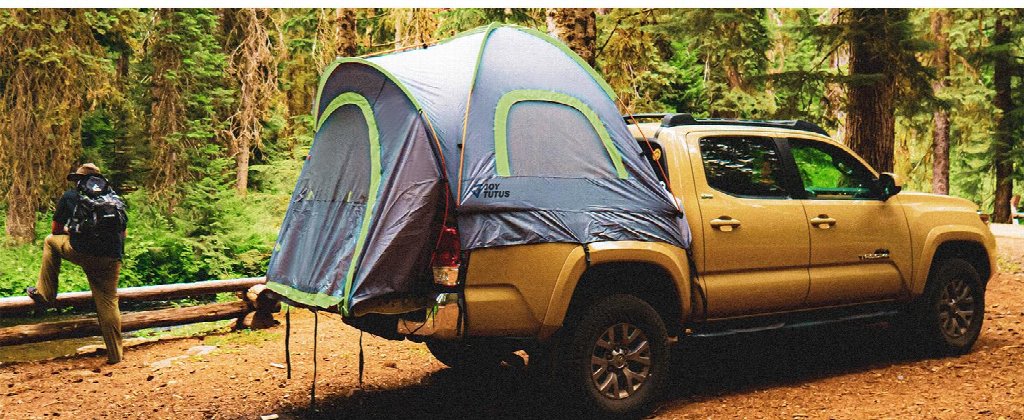
Why I Started Looking Beyond Traditional Tent Camping
For years, my setup was simple: a three-season dome tent, a sleeping pad, and whatever flat patch of ground I could find. It worked fine for a long time. But on a three-day trip through the Pacific Northwest last fall, a few small annoyances started adding up.
The first was just finding a decent site. After a full day of shooting and driving, I didn’t always have the energy to walk a campsite looking for the flattest, driest spot. Some nights I’d end up on a slight slope or near a patch of ground that looked dry and wasn’t.
The second issue was the weather. It rained on and off for two of the three days, and packing up a wet tent in the morning is its own special kind of miserable. I’d get everything else loaded into the truck, then have to deal with a soggy tent taking up space and getting everything near it damp too.
The third thing, honestly, was just time. I wanted to get from one location to the next more efficiently, especially with an early sunrise shoot planned. Setting up and breaking down a ground tent twice a day started to feel like it was eating into the parts of the trip I actually cared about.
None of this was a disaster. It was just friction, trip after trip, and it made me start looking at my truck differently.
Turning My Tacoma Into a Sleeping Setup
My Tacoma is a 2021 Double Cab, and it’s already my daily driver. It carries my camera gear, hauls stuff for hikes, and gets used for weekend trips up and down the coast. I hadn’t thought about the bed as anything other than cargo space until that rainy trip.
But once I started paying attention, the logic was pretty simple. The bed was already elevated off the ground, so I wouldn’t have to worry about finding flat terrain the same way. It was enclosed on three sides, which meant a smaller footprint to weatherproof than a full ground tent. And since most of my gear was already living back there anyway, it felt like I could consolidate instead of adding a whole separate camping system on top of what I was already carrying.
I want to be clear that this isn’t me saying truck camping is better than tent camping in general. It just made sense for how I was already using the truck. If I didn’t already own a pickup, I probably wouldn’t have gone out and bought one just for this.
What I Learned About Choosing a Truck Bed Tent
Once I decided to look into it, I realized a truck bed tent isn’t a one-size-fits-all product the way I’d assumed. There’s more to think about than I expected.
The first thing I had to figure out was my actual bed length. The Tacoma Double Cab has a shorter bed than a lot of full-size trucks, so I had to rule out a handful of tents built for longer beds right away. Getting this measurement wrong seemed like the easiest way to end up with a tent that either sagged in the middle or didn’t fully cover the bed.
Capacity mattered too. I mostly camp solo or with one other person, so I didn’t need anything oversized, but I still wanted enough room to sit up and change clothes without feeling like I was in a coffin.
Weather protection was a big one, given what had just happened to me. I looked for tents with a rainfly option and materials that were actually described as waterproof rather than just water-resistant, since those are different things. Ventilation mattered for the same reason — a tent that seals out rain but traps condensation just trades one damp-gear problem for another.
Setup and takedown speed was probably my top priority after the rainy morning that started this whole search. I didn’t want something that took as long to pitch as my ground tent did. Some of the truck bed tents I looked at were built for quicker setup, which appealed to me a lot more than something with a complicated pole system.
I also thought about storage. A tent that folds down small enough to fit in the cab or a corner of the bed when it’s not in use was more appealing than something bulky that would eat into the cargo space I needed for my camera gear.
While I was comparing options, I came across Joytutus’s truck bed tent lineup, which had a range of sizes and setup styles, including some built for quicker or semi-automatic setup and others with a more traditional pole-and-rainfly design. It was one of several brands I looked at, and it helped me get a clearer sense of what fit questions I actually needed to ask before buying anything — bed length, weather protection, and how much time I actually wanted to spend setting up camp.
I’ll say upfront that a truck tent doesn’t solve every camping problem. You still need to think about ground clearance if you’re parked on uneven terrain, and you’re still working within the footprint of your truck bed, which is smaller than most ground tents. It’s a trade-off, not a magic fix.
The Tent Solved One Problem, But Not Everything
Here’s where I made my first real mistake. I assumed that once I had a tent that fit my truck bed, I was basically done. Shelter was sorted, so sleeping should be sorted too, right?
Not exactly. The first night I tried the new setup, I laid my old sleeping pad directly on the bed liner and quickly remembered that a truck bed is just corrugated metal or plastic with a thin liner over it. It’s flat, which is an improvement over uneven ground, but it’s not soft, and it’s not insulated. I woke up sore and a little cold, and I realized I’d been thinking about this as one problem when it was actually two: staying dry and sleeping comfortably. The tent handled the first. It had nothing to do with the second.
Choosing a Mattress for Truck Camping
So I started researching truck-bed mattresses, which turned out to be its own small rabbit hole.
The first thing I had to account for was, again, my bed dimensions. A mattress that’s sized for a longer bed is going to leave gaps or fold awkwardly in a shorter one, and a mattress that’s too narrow leaves you rolling toward the wheel wells. I needed something that actually matched the Tacoma’s bed rather than something generic.
Thickness mattered more than I expected. A thin pad is easy to pack but doesn’t do much to smooth out the ridges in the bed liner. Something with more loft made a noticeable difference in comfort, though it also takes up more room when it’s not inflated.
I also thought about how many people needed to sleep on it. Since I’m usually solo or with one other person, I didn’t need anything designed for a crowd, but I did want enough width that I wasn’t sleeping shoulder-to-shoulder with my gear.
Portability and how it packs down were practical concerns, since I’m already tight on space with camera equipment. And for anything inflatable, how it inflates and deflates matters more than people think — a mattress that takes ten minutes of manual pumping after a full day of driving isn’t something I wanted to deal with.
While comparing options, I came across Joytutus’s air mattress for truck beds, which included a few different inflatable options sized for different bed lengths, some with built-in pumps and some designed to work with an external one. It was useful mainly for seeing how mattress sizing lined up with the tent sizing I’d already been researching, since the two aren’t always sold by the same company or measured the same way.
What I took away from this part of the process is that the tent and the mattress aren’t really separate purchases. They’re two parts of the same sleeping system, and it’s worth thinking about them together rather than solving one and assuming the other will work itself out.

The Rest of My Truck Camping Setup
Beyond the tent and mattress, a few other things made a real difference without needing much of an upgrade at all.
I switched to a sleeping bag rated a bit warmer than what I used for ground camping, since the truck bed doesn’t hold heat the way the earth does. A regular pillow works fine, though I’ve started compressing mine to save space. For lighting, a small battery-powered lantern hung from the tent’s interior loop beats fumbling with a headlamp. My cooler and cooking gear stay mostly the same as before, just repositioned so they’re accessible without unpacking the whole bed. A couple of labeled storage bins have made loading and unloading faster, which matters more than I expected after a long shooting day. I also keep a power bank for charging camera batteries and a basic emergency kit, which I’d recommend regardless of how you’re camping.
None of this is exotic. It’s mostly about organizing what I already had in a way that works with the new setup instead of against it.
What I Would Do Differently on My Next Trip
Looking back, I would have measured my truck bed properly before looking at a single tent listing, instead of guessing and having to double-check specs later. I also would have set up the tent and mattress once in my driveway before a trip, just to work out the process when I wasn’t tired or losing daylight. The first time I did it in the field, it took twice as long as it needed to.
I’d also pack lighter on the “extra just in case” items. Between camera gear and camping gear, it’s easy to overload the bed, and a full truck bed makes the whole sleeping setup feel cramped even with a good tent and mattress.
The biggest lesson for me was that truck camping isn’t really about buying the right gear once and being done. It’s more of a system you tune over a few trips, the same way I did with my original tent-camping kit years ago.
Is Truck Camping Right for Everyone?
I don’t think truck camping is inherently better than tent camping, and I’d be skeptical of anyone who tells you it is. If you don’t already own a pickup, I wouldn’t buy one just for this. And if you like the flexibility of pitching a tent somewhere your truck can’t reach, ground camping still has real advantages.
But if you’re already driving a truck for daily life the way I am, and you’re tired of the small inconveniences that come with pitching a tent after a long day, it’s worth looking into. For me, it turned out to be less about upgrading my gear and more about using what I already had a little more intentionally. That’s really the whole lesson from my first truck camping trip: it’s not a better way to camp, just a different way to organize one, and it happened to fit how I already travel.
Last Updated on September 15, 2026
