
Many people feel confused and unsure about what to do when a car accident happens. One of the most important steps is figuring out who was at fault, as this affects insurance claims, liability, and possible legal action. Understanding what evidence is needed to prove fault is key to protecting your rights and ensuring a fair outcome.
Collecting the right evidence immediately after a car accident is also important because crucial details can easily be lost or forgotten. Acting quickly helps preserve the facts and strengthens your claim.
In this article, we will look at the essential evidence needed to prove fault, which ultimately determines who is legally responsible.
Key Takeaways
- Understanding who is at fault in a car accident is crucial because it affects insurance claims and legal responsibility.
- Collecting evidence immediately after a crash helps preserve important details that might otherwise be lost.
- Police reports offer strong, unbiased documentation that supports your version of events.
- Photos, videos, witness statements, and camera footage provide clear visual and factual proof of how the accident happened.
- Expert reconstruction reports add professional analysis that helps determine the true cause of the accident.
Evidence Needed to Prove Fault
Police Report
A police report is one of the strongest pieces of evidence. Police record important details such as the location of the accident, road conditions, weather, the positions of the cars, and sometimes their initial idea of who caused the crash. Insurance companies and courts often rely on these reports because they are official and unbiased. Even if the accident seems small, having a report can be very helpful.
Witness Statements
Independent witnesses can give an honest view of the accident. Because they are not involved, their stories are often trustworthy. Collect their names and phone numbers, and ask them to explain what they saw. Even small details, like how fast cars were moving or which car moved first, can help explain what really happened.
Photographs and Videos of the Accident Scene
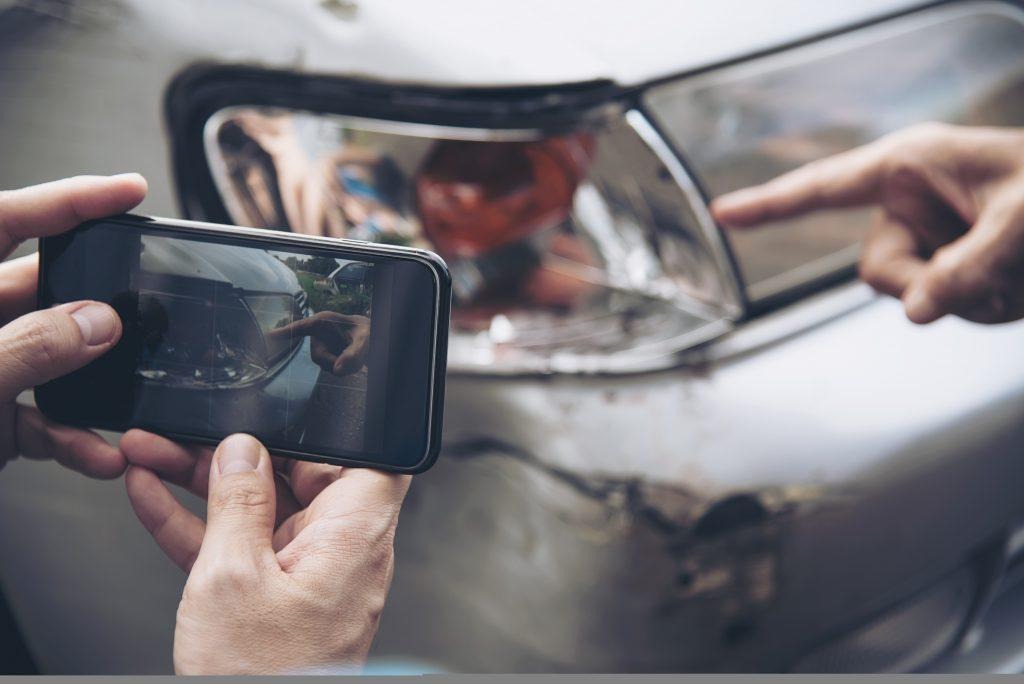
Pictures and videos are very important in proving fault. Take photos or videos of:
- Damage to all vehicles involved
- The accident scene and where the cars stopped
- Road conditions like skid marks, potholes, or debris
- Traffic signs, signals, and other important road markers
- Any injuries you or your passengers have
Insurance companies and courts can use these images or videos to compare with statements from drivers and witnesses, helping to determine who is at fault.
Traffic or Surveillance Camera Footage
Check if nearby traffic cameras, store security cameras, or dashcams recorded the accident. If footage is available, make sure to save it quickly before it is deleted or overwritten. Video footage provides clear and unbiased evidence of how the accident happened. It can show which driver moved first, the speed of the vehicles, traffic signals, and the exact positions of the cars.
This type of evidence is especially helpful if drivers disagree about what happened, because it gives a reliable record that supports your claim and can be used by insurance companies or courts to determine who is at fault.
Expert Reports
Accident reconstruction experts are professionals who study every detail of a crash to understand exactly what happened. They look at things like skid marks on the road, the damage to all vehicles involved, the positions of the cars, and even the surrounding area.
They may also review photographs, videos, dashcam footage, and police reports to get a complete view of the accident. Their goal is to recreate the sequence of events and explain how the collision occurred. Expert reports provide strong, unbiased proof that can clearly show which driver was likely at fault.
They can explain details that are hard for normal people to understand, like how fast a car was moving, the angle of impact, or whether a driver failed to follow traffic rules. Insurance companies and courts often rely on these reports to make fair decisions because they give professional and accurate evidence of what happened during the crash.
Last Updated on December 1, 2025
