
Japan offers some of the most breathtaking camping vistas in the world, from the rugged coastlines of Hokkaido to the misty cedar forests of Kumano. However, the camping experience in the Japanese archipelago is governed by a unique blend of seasonal intensity, topographical challenges, and a deeply ingrained social etiquette. For both international travelers and local residents, understanding these nuances is the difference between a stressful outing and a harmonious retreat into nature.
As the “outdoor boom” continues to sweep across Japan, campsites—ranging from “Auto-Camp” grounds to remote mountain clearings—have become more sophisticated. To help you navigate this evolving landscape, we have compiled a set of insider tips tailored specifically to the Japanese environment.
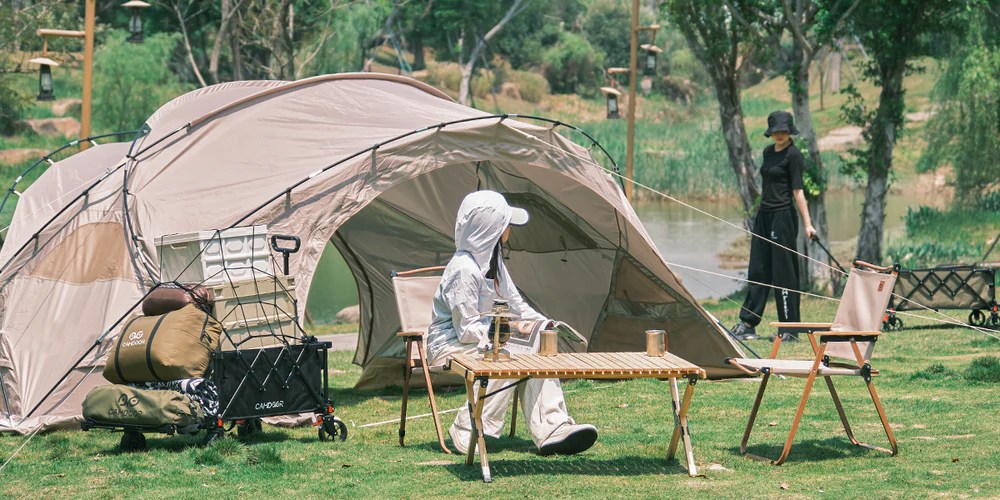
Respecting the “Ma”: The Social Etiquette of Japanese Campsites
In Japan, the concept of Ma (space or interval) is vital. Most Japanese campsites are organized with a high level of precision. Whether you are at a free site (furi-saito) or a designated plot (kukaku-saito), respecting the visual and auditory boundaries of your neighbors is paramount.
One of the most important tips for camping in Japan is to observe “Silent Time.” Most managed campgrounds enforce a strict quiet policy starting at 9:00 PM or 10:00 PM. Unlike the festive, high-energy atmosphere found in some Western parks, Japanese campers generally seek shizuka (quietude). Keeping voices low and extinguishing bright lanterns during these hours is not just a rule—it is a mark of a seasoned and respectful camper.
Seasonal Strategy: Fighting Humidity and Cold
Japan’s four seasons are distinct and demanding. If you are camping during the Tsuyu (rainy season) in June or the humid heights of August, moisture management becomes your primary concern. The ground in Japan’s forested regions stays damp long after a rainstorm, which can quickly lead to a cold and uncomfortable night if your gear isn’t up to the task.
To combat the dampness rising from the earth, investing in a high-quality キャンプ 用 マット is a non-negotiable step. In Japan, ground moisture can sap body heat even in the summer. A mat with a high R-value (thermal resistance) acts as a critical barrier, ensuring that the humidity of the soil doesn’t penetrate your sleeping area. Furthermore, during the humid summer months, a mat with a breathable surface helps prevent that sticky, restless feeling that often ruins a mountain morning.
Elevation and the “Two-Season” Rule
When planning a trip to popular highland areas like Nagano or Yamanashi, remember that mountain weather in Japan operates on a different calendar than the valleys. It is common to experience a 10 to 15-degree Celsius drop as you ascend. Many beginners make the mistake of packing for Tokyo’s climate, only to find themselves shivering at a high-altitude site near the Japan Alps.
For those venturing into these cooler, uneven terrains, a sturdy キャンプ コット can elevate your experience—literally. While mats are excellent for insulation, a cot keeps you off the uneven, often rocky Japanese volcanic soil altogether. It also allows for airflow underneath your body during the sweltering humidity of July, or provides a stable, dry platform when the autumn frost begins to settle on the grass. Using a cot also helps protect the delicate vegetation at some of Japan’s more pristine “Eco-Camps,” as it minimizes the total surface area in contact with the ground.
Navigating the “Gomi” (Trash) Challenge
One of the biggest surprises for travelers in Japan is the strictness of waste disposal. In many Japanese national parks and private campgrounds, the rule is “Take everything home.” Unlike many international parks that provide large communal dumpsters, Japanese sites often expect you to carry your trash back to the city.
If a campsite does accept trash, it will be strictly categorized: burnable, non-burnable, plastic (PET) bottles, glass, and aluminum. Before you arrive, prepare by pre-sorting your supplies. Remove unnecessary packaging at home to minimize the volume of waste you generate. Being “trash-conscious” is a core part of the Japanese camping spirit and ensures that these beautiful locations remain accessible for future generations.
Fire Etiquette: The Rise of “Takibi” Culture
The “Takibi” (bonfire) is the heart of the Japanese camping experience. However, “open fires” directly on the ground are almost universally prohibited across Japan to protect the soil and prevent forest fires. To enjoy a fire, you must use a raised fire pit (takibi-dai).
Additionally, many sites require the use of a fire-proof sheet placed under your fire pit to catch falling embers. When the night is over, you are expected to dispose of the ash in designated “ash pits” (sumi-sute-ba). Never bury hot coals in the ground; the volcanic soil in parts of Japan can retain heat for a surprisingly long time, posing a risk to both the environment and other campers.

Booking and “Kyujitsu” (Holiday) Awareness
Japan’s best campsites can book up months in advance, especially during “Golden Week” (late April to early May) and the “Obon” period in August. If you are looking for tranquility, avoid these peak holiday periods at all costs. Instead, aim for “middle-of-the-week” trips or the “Silver Week” in September.
Many high-quality campsites in Japan now use online booking portals, but some of the most beautiful, secluded spots still require a phone call in Japanese. Don’t be afraid to use translation tools or seek help from a local concierge to secure these hidden gems.
📖 Recommended Reading: If you’re looking for more useful information, check out:
Final Thoughts: The Reward of Preparation
Camping in Japan is a deeply rewarding way to see a side of the country that Shinkansen riders never witness. It allows you to experience the Shinrin-yoku (forest bathing) that the culture is famous for. By respecting the local silence, preparing for the dramatic shifts in humidity and temperature with the right camping mat or folding cot, and meticulously managing your waste, you become part of a community that values the preservation of the wild.
In Japan, the campsite is seen as a temporary home. If you treat the land and your neighbors with the same care you would your own living room, the mountains of Japan will open up to you in ways you never imagined. Pack smart, stay quiet, and enjoy the sunrise over the clouds—it’s an experience that defines the true spirit of Japanese travel.
Last Updated on August 25, 2026
