
I’ll be honest: the idea of hiking more than 500 kilometers was not on my bucket list, especially with knees that sound like popcorn in the microwave. But curiosity (mixed with a dash of stubbornness) got the better of me, and off I went, deep-diving into the world of the Camino de Santiago. Along the way, I found a world where seashells are signposts, routes sprawl like a spider web across a continent, and yes, even folks with dodgy joints find their way to Santiago. So, what’s the real story behind this legendary trek? Let’s get weird and wander together.
Quick Facts:
- Total Camino routes: There are over 40 different Camino paths, but only 7 are considered “main” routes. The rest are lesser-known or variations.
- Most popular: The Camino Francés wins by a landslide, nearly half of all pilgrims walk it. Most start in Sarria (the last 100 km) to earn the Compostela certificate.
- Best for bad knees: The Camino Portugués (Central Route from Porto) is flatter and has smoother trails compared to others. The last 100 km from Tui is especially manageable, and perfect to get the your pilgrim certificate and passport full!
- Easiest route overall: The Camino Inglés (from Ferrol) is the shortest (120 km) with gentle hills, perfect for beginners or those short on time.
- Hardest route: The Via de la Plata (1,000 km from Seville) is brutal long stretches of no shade, extreme heat, and few services.
- Most scenic: The Camino del Norte hugs Spain’s northern coast with epic ocean views, but be ready for constant ups and downs.


Most Popular Camino de Santiago Routes
I used to think the Santiago Pilgrimage was just one long, dusty trail one path, one story, one epic blisters-and-pain journey. Turns out, I was hilariously wrong.
The Camino de Santiago is less a single route and more like a whole galaxy of walkways, each with its own quirks, starting points, accommodations, and bragging rights. You can pick from an array of amazing Cozycozy vacation rentals in the area as it helps you sort across all top accommodation websites.
Seriously, there are nearly forty official Camino routes (and counting). It’s like someone took the idea of a pilgrimage and said, “Let’s make it choose-your-own-adventure style.”
Starting Points and Popular Camino Routes
When it comes to starting points, yes, Spain is the classic, but you can also kick off your trek from Portugal, England, France, Belgium.
All these roads, whether they’re winding through Portuguese vineyards or English countryside, eventually funnel into the same legendary destination: Santiago de Compostela.
Now, about those routes:
If you want the crowd-pleaser, the Camino Frances is your jam. It’s the best-known, clocking in at about 500 km from St. Jean Pied de Port in France to Santiago. It’s the one you’ve probably seen in movies or on Instagram, full of friendly faces and plenty of places to stop for a café con leche. The Camino camaraderie here is real!
If you’re after something a bit more rugged, the Camino del Norte hugs Spain’s northern coast for a whopping 825 km think dramatic cliffs and salty sea air (and, okay, a few more hills than you might expect).
Feeling ambitious? The Via de la Plata is the heavyweight champion, stretching 1000 km from Seville up to Santiago. It’s less crowded, more solitary, and has a vibe that’s part ancient Roman road, part “am I lost yet?” adventure.
On the other hand, there’s the End of the World Route, the Camino Finisterre. This one actually keeps going after Santiago, all the way to the Atlantic Ocean.
Back in the 9th century, people literally thought this was the edge of the earth. Imagine walking until you run out of land. Mind. Blown.
📖 Recommended Reading: If you’re looking for more useful information, check out Camino de Santiago Packing List: What I Actually Used (And What I Regret)
Camino de Santiago Routes Comparison
Here’s a quick look at some of the main Camino de Santiago routes and their stats:
| Route | Distance (km) | Starting Point | Highlights |
|---|---|---|---|
| Camino Frances | 790 | St. Jean Pied de Port, France | Classic, social, well-marked |
| Camino del Norte | 825 | Irun, Spain | Coastal views, challenging terrain |
| Via de la Plata | 1000 | Seville, Spain | Longest, quiet, Roman history |
| Camino Finisterre | ~90 | Santiago de Compostela | End of the World Route, Atlantic finish |
So yeah, the Camino is way more than just one path. It’s a web of walkways, each with its own flavor and history, all leading to that magical spot in Santiago and sometimes, even beyond.

How to Choose Your Camino Route
The first thing I had to consider when planning my Camino de Santiago adventure wasn’t the mystical landscapes or the legendary Spanish wine. Nope. It was my knees. Specifically, the kind of knees that sound like you’re stepping on a bag of potato chips every time you stand up.
If you’ve got knee issues hiking, you know exactly what I mean.
So, before I even thought about which route to take, I had to figure out which Camino wouldn’t leave me stranded in a field somewhere, clutching my ibuprofen like it was gold.
Fitness Level & Experience (Or, “Why My Knees Hate Me”)
Look, I’m not gonna lie some Camino routes are basically stair-climbing simulators disguised as spiritual journeys. If your knees sound like a popcorn machine when you take the stairs, skip the Camino del Norte and go for the Camino Portugués instead. It’s flatter than a pancake, and the worst hill you’ll face is maybe a speed bump.
The Camino Inglés is another sneaky-easy option short, sweet, and with fewer climbs than my motivation on a Monday morning.
But if you’re secretly a mountain goat and want a challenge, the Camino Primitivo will have you cursing every uphill step… in the most beautiful way possible.
Time Available
Got a whole month to spare? Go big with the Camino Francés 780km of villages, vino, and questionable hostel snorers.
But if your boss only gave you a week off, don’t panic. The last 100km from Sarria still counts for your Compostela certificate, and let’s be real no one needs to know you skipped the first 680km.
Only got five days? The Camino Finisterre (starting in Santiago) dumps you at the “end of the world” coastline, which is way more dramatic than it sounds.
And if you’re feeling extra lazy, the Camino Inglés wraps up in under a week. No judgment here.
Preferred Scenery
If your ideal walk involves more ocean than effort, the Camino del Norte is basically a seaside stroll with bonus seafood pit stops.
The Camino Portugués Coastal is even easier flat, breezy, and with enough boardwalks to make you forget you’re actually exercising.
But if you’re here for the Sound of Music vibes (rolling hills, charming villages, and the occasional existential crisis), the Camino Francés delivers. Just be ready for O Cebreiro, a hill so steep it should come with a warning label.
Want total solitude? The Via de la Plata is like the Camino’s weird loner cousin, 1000km of empty Roman roads and enough sunflowers to make you question your life choices.
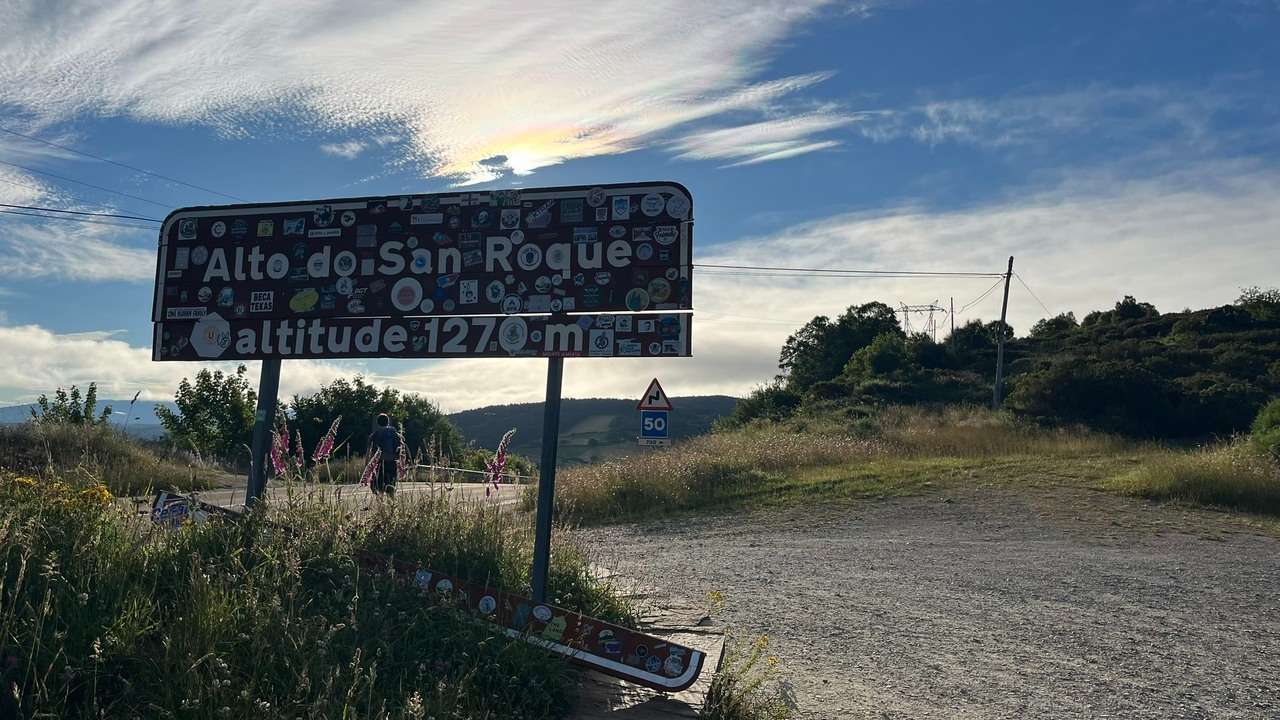

Social vs. Solitary Experience
The Camino Francés is basically summer camp for adults you’ll make friends, share bunk beds, and bond over blisters. But if you’d rather not explain why you’re crying into your tortilla at 8am, the Camino del Norte or Primitivo offer peace, quiet, and the occasional confused cow.
The Camino Portugués is the Goldilocks option social but not overwhelming, with enough solo stretches to pretend you’re deeply contemplative and not just out of breath.
Is the Camino Frances The Best Route for Bad Knees?
Turns out, not all Caminos are created equal. Some are downright brutal think steep climbs, rocky descents, and endless stretches that would make even the fittest hiker wince.
But after a lot of research (and a little soul-searching), I landed on the Camino Frances. Why? Well, it’s about 500 kilometers or more, we are talking bout walking 25km daily, which is no walk in the park, but it’s known for being less punishing on the joints than other routes.
Plus, it’s super scenic, with a little bit of everything: rolling hills, charming villages, and plenty of places to rest your weary legs.
Here’s the thing that really sealed the deal for me: the average age hikers on the Camino Frances is somewhere between 65 and 75.
That’s right this is a trek where age is just a number, and physical limitations aren’t something to hide. In fact, they’re kind of the norm.
I met a grandma outpacing college students, and let me tell you, she was an inspiration (and a little bit intimidating). On the Camino, nobody’s joints are quiet. As I like to say,
“Honestly, my knees may be loud, but on the Camino, nobody’s joints are quiet.”
Comparing Camino Routes for Physical Limitations
So, if you’re worried that your own physical limitations might hold you back, let me assure you: you’re in good company.
The Camino Frances is basically the unofficial headquarters for squeaky walkers, creaky knees, and anyone who’s ever had to ice something after a long day.
Research shows that many people choose their Camino route based on what their bodies can handle, not just for the fame or the Instagram-worthy views. And that’s totally okay. In fact, it’s kind of beautiful.
Let’s break down how the main Camino routes stack up for those of us with knee issues or other physical limitations:
| Route | Distance (km) | Average Hiker Age | Difficulty for Physical Limitations |
|---|---|---|---|
| Camino Frances | 500 | 65–75 | Less Difficult |
| Camino del Norte | 825 | Varied | More Challenging (hilly, coastal) |
| Via de la Plata | 1000 | Varied | Most Challenging (long, remote) |
So, if you’re dreaming of a 500 kilometers trek but your body’s got its own quirks, don’t let that stop you.
The Camino Frances is proof that physical limitations aren’t a barrier they’re just part of the story. And honestly, it’s a story worth telling, squeaky knees and all.


Historical Significance of the Camino Routes
Pilgrimage history is wild. In medieval times, making it to Santiago was already a feat, but pushing on to Finisterre? That was like walking to another planet.
Research shows that the Atlantic Ocean was once believed to be the end of the world, and pilgrims who reached it probably felt like true explorers.
If medieval pilgrims could see Google Maps, they’d probably faint.
Shells & Symbolism: Why a Seashell Points the Way
When I first started researching my Camino de Santiago, my main concern was my knees. Seriously, they’re not just bad they’re “creak like an old staircase” bad.
So, I was deep into forums about knee braces and gentle slopes when something totally random caught my eye: the Camino Shell Symbol. I’d seen it in photos, but I never stopped to ask, “Why a shell?”
Fast forward to my arrival in Santiago. I’m hobbling along, knees protesting every step, and suddenly bam! there’s that shell symbol everywhere.
On signposts, on sidewalks, even on people’s backpacks. I remember stepping into Santiago, spotting that endless shell symbol, and thinking,
“So, this funky seashell is the compass?”

What does the Camino shell symbolize?
Turns out, the Camino Shell Symbol isn’t just for decoration or some random branding. It’s actually the unofficial (but also kind of official) signpost for the entire Camino de Santiago.
Here’s the wild part: it’s not just about one route. Nope. The shell represents all the Camino Routes. Research shows there are more than 40 documented paths that lead to Santiago.
That’s right forty! And they don’t just start in Spain. There are Camino routes from Portugal, England, France, Belgium, and a bunch of other places across Europe.
The symbolism is actually pretty cool. Picture a seashell those lines or “rays” that spread out from the hinge? Each one is like a different Camino route, all pointing back to the same spot: Santiago de Compostela.
So, every time you see that shell, you’re looking at a map, a history lesson, and a unifying icon for pilgrims from all over. It’s kind of mind-blowing when you think about it. I mean, who knew a seashell could be a global GPS for spiritual wanderers?
📖 Recommended Reading: If you’re looking for more useful information, check out:
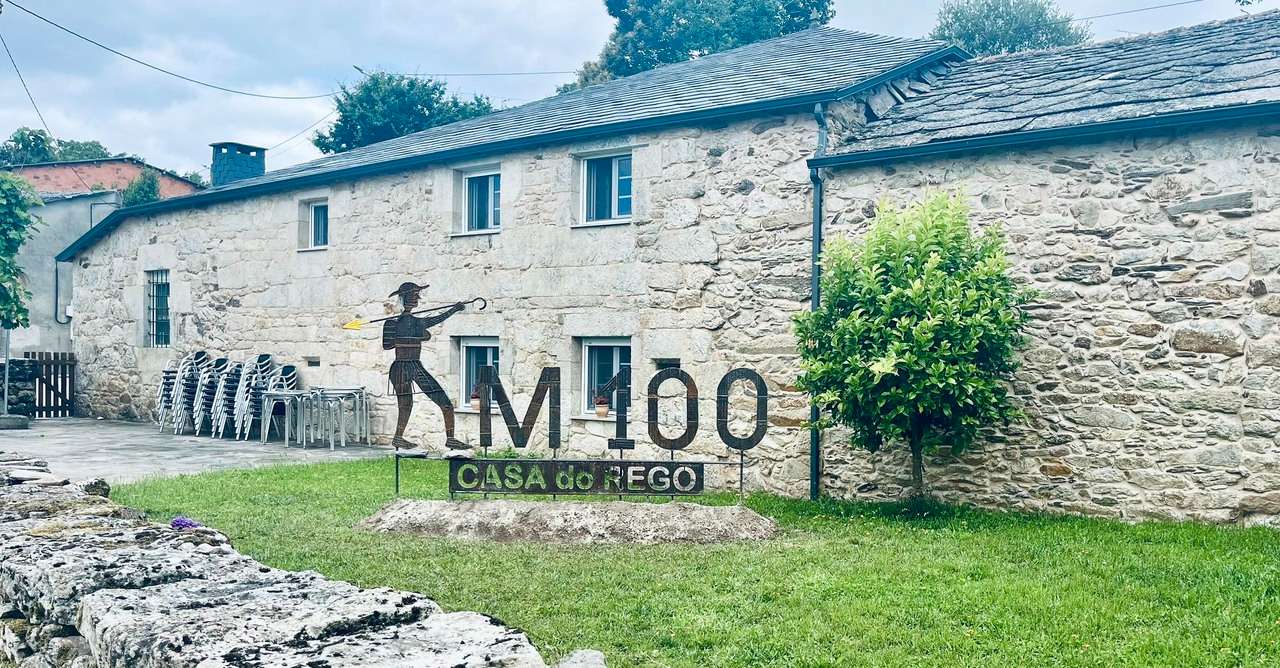
How the Shell Guides Pilgrims on Different Camino Routes
What really got me was how the shell is used as a literal road sign. You’ll see it on walls, on the ground, and even carved into ancient stones. It’s like the city is whispering, “Keep going, you’re on the right path.”
For someone like me, who gets lost in a grocery store, this was a lifesaver and it’s not just for the famous Camino Frances.
The shell points the way for the Camino Portugues, Camino del Norte, Camino Primitivo, Via de la Plata, Camino Ingles, and even the wild Camino Finisterre the so-called “End of the World” route.
So, the next time you spot that little shell, remember: it’s not just a quirky logo. It’s a symbol of unity, a nod to the 40+ Camino Routes, and a reminder that all roads no matter how wobbly your knees can lead to Santiago.
TL;DR:
In a nutshell: The Camino de Santiago is more than a hike it’s a patchwork of routes, history, and personal journeys. Even if you’ve got stubborn knees or quirky reasons for wanting to try, there’s a path for you (and a shell waiting at the end).

FAQs
If you’re new to long-distance hiking or just want a stress-free start, the Camino Portugués (especially the Coastal route from Porto) is your best bet. It’s flatter than most, has plenty of cafes and guesthouses, and the scenery is stunning.
You don’t need to be an athlete, but walking 15–20 km daily with a backpack is no joke. Start training months ahead, try weekend hikes with the shoes and pack you’ll use. Listen to your body: blisters and tired legs are normal, but sharp pain means stop.
Absolutely! Solo pilgrims make up half the crowd, and it’s super safe, especially on busy routes like the Francés. You’ll meet people at albergues (hostels) or cafes within days. For extra peace of mind, stick to well-marked paths (follow those yellow arrows!) and just use common sense like you would in any new place
Nope! The minimum is 100 km on foot (or 200 km by bike) to earn the certificate. That’s why the last stretch from Sarria (on the Francés) or Tui (on the Portugués) is packed. It’s the easiest way to check the box.
Last Updated on March 29, 2026
