
Every city has a side of it that reveals the place most honestly. In Chiang Mai, that side is the river.
The Ping River shaped this city long before the moat and the red-brick walls went up. It carried teak downstream to Bangkok, brought traders north, and gave the old commercial quarter its rhythm and its wealth. Today it is where Chiang Mai exhales, a slow green ribbon of water lined with heritage shophouses, riverside temples and streets that still belong to the people who live on them rather than to the guidebooks.
If you are searching for the best riverfront hotel in Chiang Mai, what you are really looking for is a way into that rhythm. This guide covers the Ping River side of the city, what the quarter is actually like, how to choose a room, when to visit, and what to do once you are there, and how Meliá Chiang Mai works as a base for it.
Understanding the Ping River quarter
Most visitors arrive with the Old Town in mind: the square moat, the ancient temples, the walking streets. It is rightly the first thing people see. But travellers who return to Chiang Mai tend to drift east, towards the water.
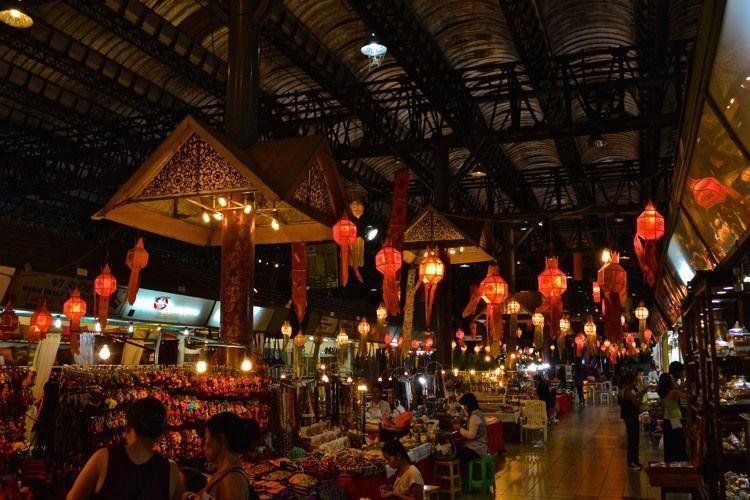
The riverside quarter is quieter and more textured than the Old Town, and considerably more lived-in. Charoen Prathet Road, where Meliá Chiang Mai stands at numbers 46–48 in the Chang Khlan subdistrict, is one of the city’s historic cultural streets. It runs parallel to the Ping just a block back from the water, and it has a long working memory: teak shophouses, small family businesses, riverside temples, consulate buildings, and a night bazaar that has been trading in one form or another for generations.
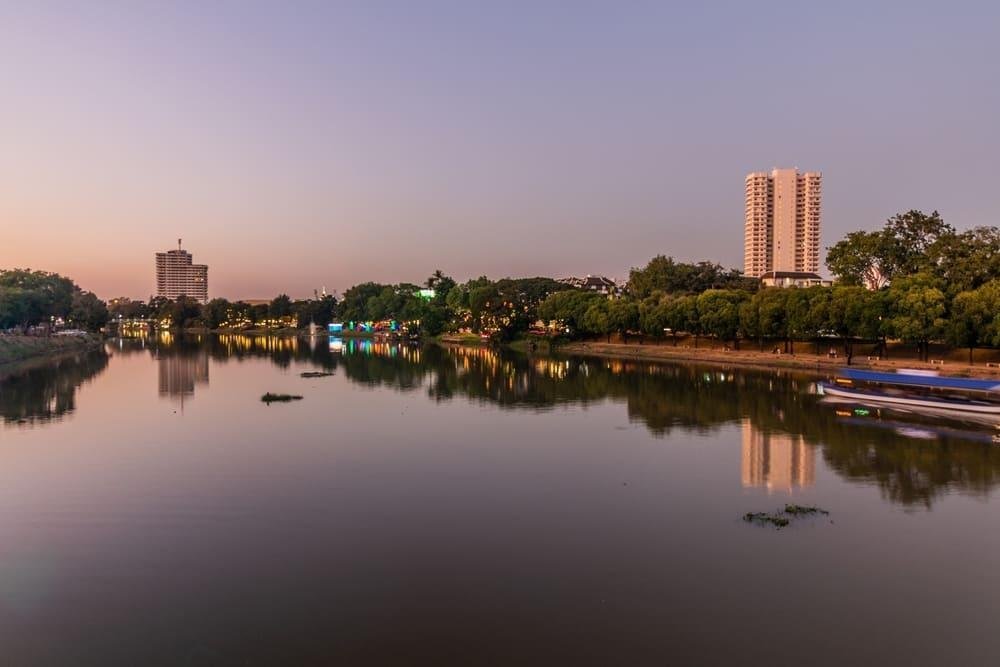
This is a genuinely practical place to base yourself, and the reason is geometry. You are close enough to the water for morning walks along the bank and evening views over it, and close enough to the Old Town that the temples are a short ride rather than a journey. Most riverside accommodation in Chiang Mai asks you to trade centrality for calm. Here you are not really asked to choose.
One point of honesty worth making, because it affects what you should expect: Charoen Prathet Road sits one block back from the water rather than directly on the bank. Meliá Chiang Mai is a hotel of the riverside quarter with genuine river views from height, not a property with a waterfront terrace at the water’s edge. If your priority is dining with your feet almost in the river, that is a different kind of property. If your priority is the river as a view, a neighbourhood and a way of experiencing the city, read on.
Where the hotel sits, and why the height matters
Meliá Chiang Mai occupies a striking 22-floor tower, among the tallest buildings in Chiang Mai, fronted by an adjoining seven-floor podium that holds the lobby, dining venues, wellness areas and pool.
That vertical arrangement is the whole point. In a low-rise city, height converts an ordinary address into an extraordinary outlook. From the upper floors the view takes in two of Chiang Mai’s defining landmarks simultaneously: the Ping River to the east, with the flat green sweep of the valley beyond it, and sacred Doi Suthep rising to the west, where Wat Phra That Doi Suthep looks down over the city from the mountainside. Water on one side, mountain on the other, and the whole grid of the old city in between.
The practical geography is equally useful:
- Chiang Mai Night Bazaar, roughly 400 metres, an easy walk
- Tha Pae Gate, the eastern entrance to the Old Town, about 1.4 kilometres
- Wat Chedi Luang, just under two kilometres
- Three Kings Monument, around 2.8 kilometres
- Chiang Mai International Airport, approximately six kilometres, usually a fifteen-minute drive
A paid airport shuttle can be arranged, and free Wi-Fi runs throughout the property. Check-in is from 15:00 and check-out at 12:00.
Choosing your room: river, mountain, or height
Room orientation shapes this stay more than at most hotels, and it is worth deciding before you book rather than on arrival.
East-facing rooms look towards the Ping River. These are the rooms for early risers. The light comes up over the water and the valley, the city is still quiet, and the river takes on a flat metallic colour before the day starts properly.
West-facing rooms look towards Doi Suthep. These are the sunset rooms, the mountain darkens against a coloured sky, and the temple lights appear on the hillside as the light goes.
The hotel holds more than 250 rooms and suites across seven room categories and two suite categories, ranging from the 30 sqm Meliá Room up to the 113 sqm Level Presidential Suite. Every room is contemporary and thoughtfully designed, with elegant Lanna Thai detailing, floor-to-ceiling windows that make the most of the outlook, a comfortable bed, a window-side sofa, and a bathroom with a rainfall shower. Rooms include a minibar, kettle, safe and flat-screen television.
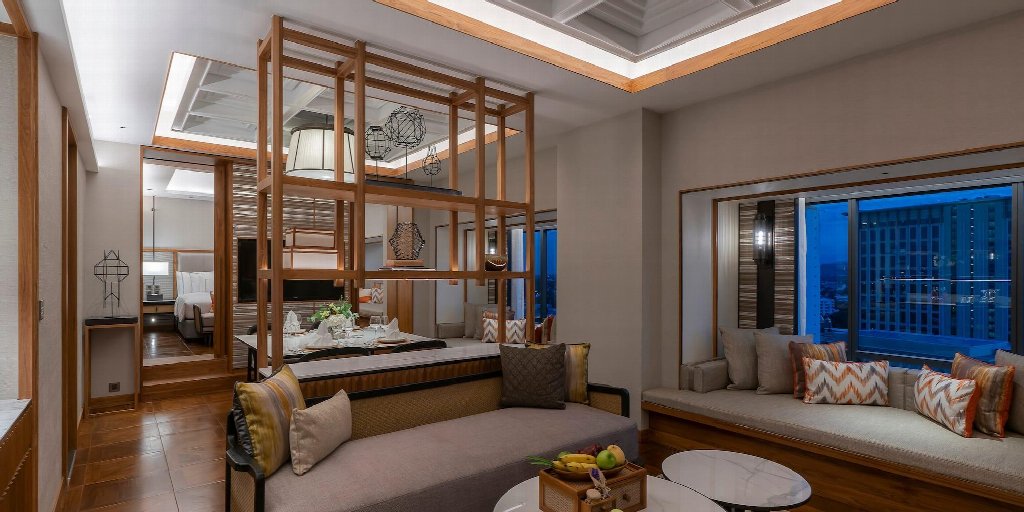
Corner Rooms and Premium Rooms add space and a wider angle of view, worth the step up if the outlook is the reason you are here. Interconnecting rooms can be arranged on request for groups travelling together.
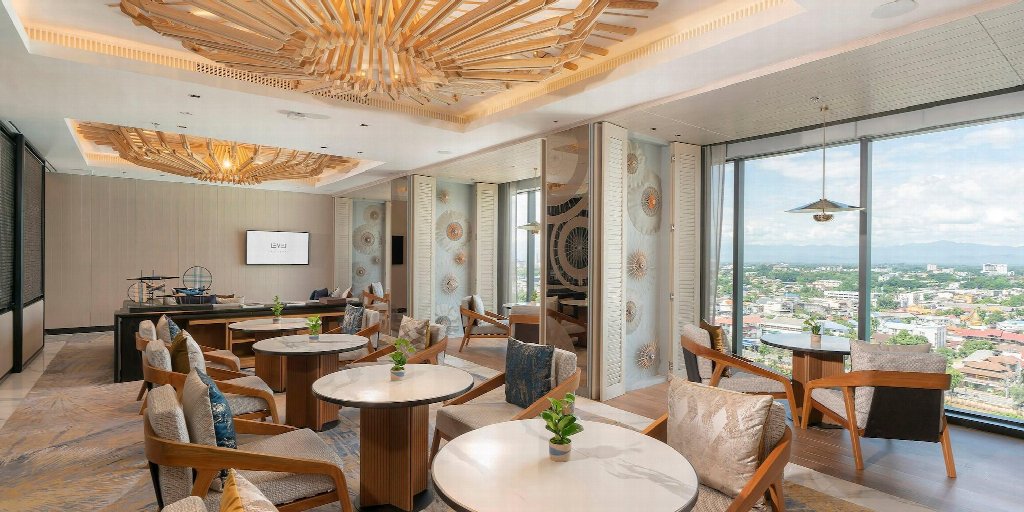
For guests who want the view paired with more service, The Level occupies the upper floors across roughly forty rooms and suites, from The Level Rooms and The Level Premium Rooms through to The Level Suites and the Presidential Suite. The proposition is convenience rather than exclusivity: private check-in and check-out, a dedicated concierge, an in-room welcome amenity, premium toiletries, an espresso coffee maker, turndown, complimentary ironing, and later check-out subject to availability.
The centrepiece is The Level Lounge on the 21st floor, which runs through the day, breakfast in the morning, snacks and alcohol-free drinks through the middle of the day, afternoon tea in the early afternoon, and cocktails and canapés in the early evening, all with a panoramic outlook across the city towards Doi Suthep. If you have come for the view, this is the room where you will spend the most unplanned time in it.
You can compare the full range on the Meliá Chiang Mai rooms page.
MAI The Sky Bar: the river from twenty-two floors up
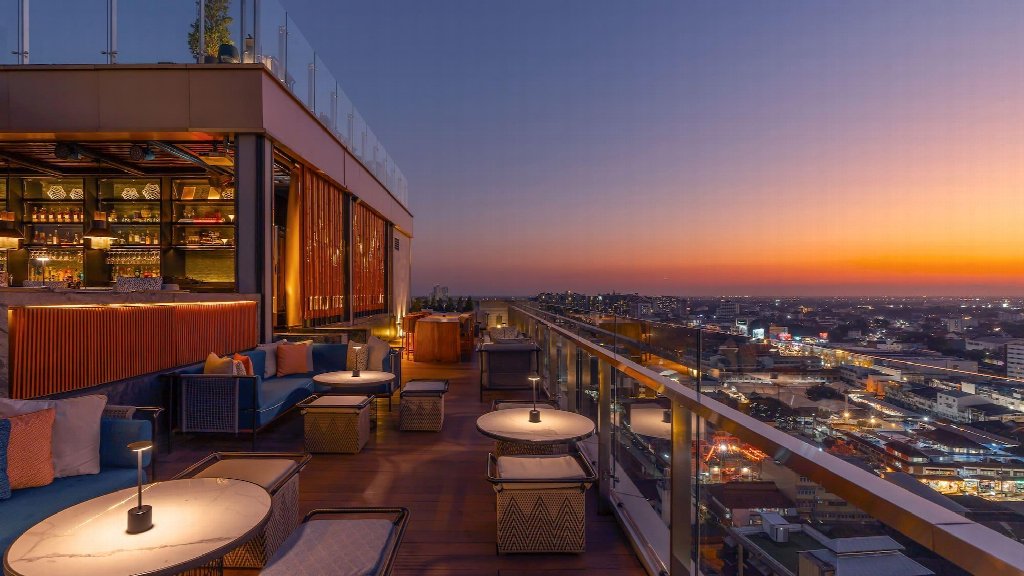
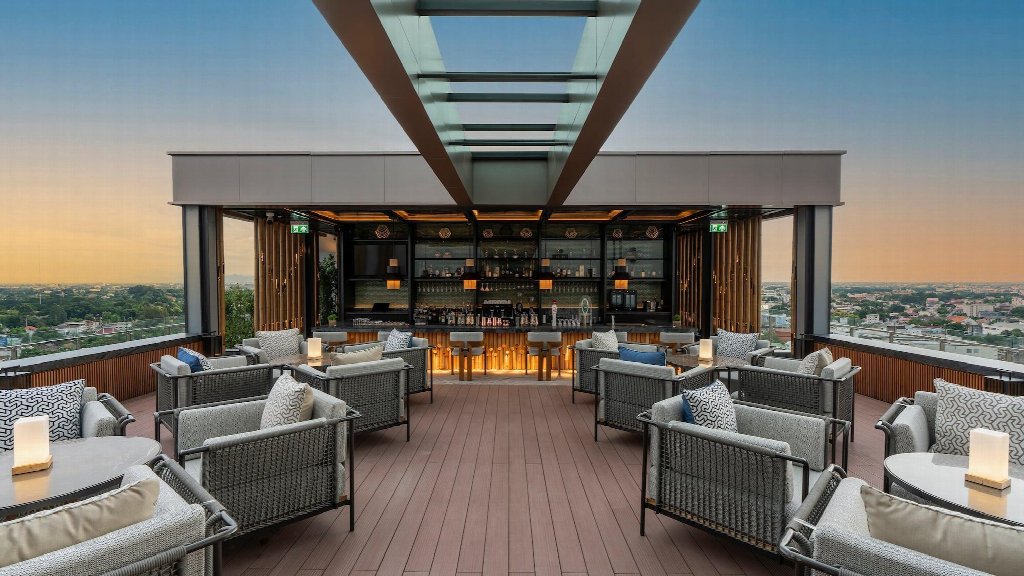
The clearest expression of this setting is MAI The Sky Bar on the 22nd floor, the highest rooftop bar in Chiang Mai. Two bars are connected by a glass bridge, which is what creates the genuine 360-degree outlook: the Ping River and the eastern plains on one side, Doi Suthep and the mountains on the other, with the glass walls keeping the whole thing open rather than framed.
It is a venue built around a particular hour. Arrive before sunset and take a seat facing west, watch the light move down the mountain, then turn as the river catches the last of it and the city switches on beneath you. The menu pairs Spanish-style tapas with cocktails made using local organic ingredients, a small, well-judged expression of Meliá’s Spanish roots meeting northern Thailand. Evening service typically runs from around 6pm until late, which covers both sunset and the night view.
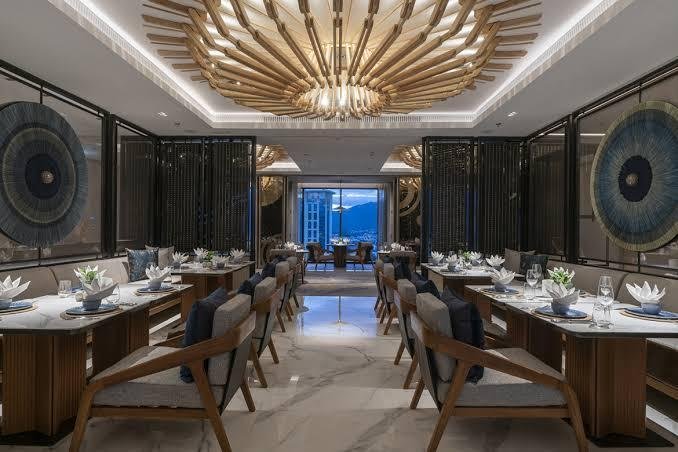
One floor below, Mai Restaurant & Bar on the 21st floor carries the same outlook into dinner. It specialises in contemporary Northern Thai cuisine prepared in an open-plan kitchen using traditional techniques with subtle Mediterranean influences, dishes built on regional recipes rather than the standard national menu, which is a meaningful distinction in a city whose food culture is genuinely its own. Dinner service generally runs through the evening from around 6 pm.
Eating through the day
Beyond the two upper-floor venues, the hotel’s other spaces are built for the slower parts of a riverside stay.
Laan Na Kitchen is the all-day dining restaurant. Breakfast here is generous, with local and international options side by side, and it carries through the day with international dishes alongside authentic Mediterranean and Spanish flavours, a direct reflection of Meliá’s culinary roots brought to northern Thailand. Vegetarian, vegan and dairy-free options can be requested.

Ruen Kaew Lounge, the lobby lounge, is the natural landing point after a morning walking the riverbank: coffee, a Spanish-inspired afternoon tea, or lighter wellbeing-focused bites from the My Balance by Meliá selection.
Tien Pool Bar keeps refreshments and relaxed poolside food within reach for the afternoons when the plan is deliberately not to have one.
Underpinning all of it is the hotel’s 360° Cuisine concept, a “farm to plate, plate to farm” approach that sources organic produce grown a short distance away, uses as much of each ingredient as possible, and returns food waste to partner farms as fertiliser. The programme is built on direct relationships with local farmers who grow specialised ingredients for the kitchen and benefit from steadier, more ethical demand. For a guest it means fresher food with a clearer story behind it, and a stay that sits comfortably alongside a more considered way of travelling.
Slowing down: the pool, the spa and the quiet hours
A riverside stay is at its best when it leaves room for nothing in particular.
The outdoor Swimming Pool sits in the podium with wooden cabanas and greenery around it, designed for adults and children alike, and it does the heavy lifting through the hot middle of the day.
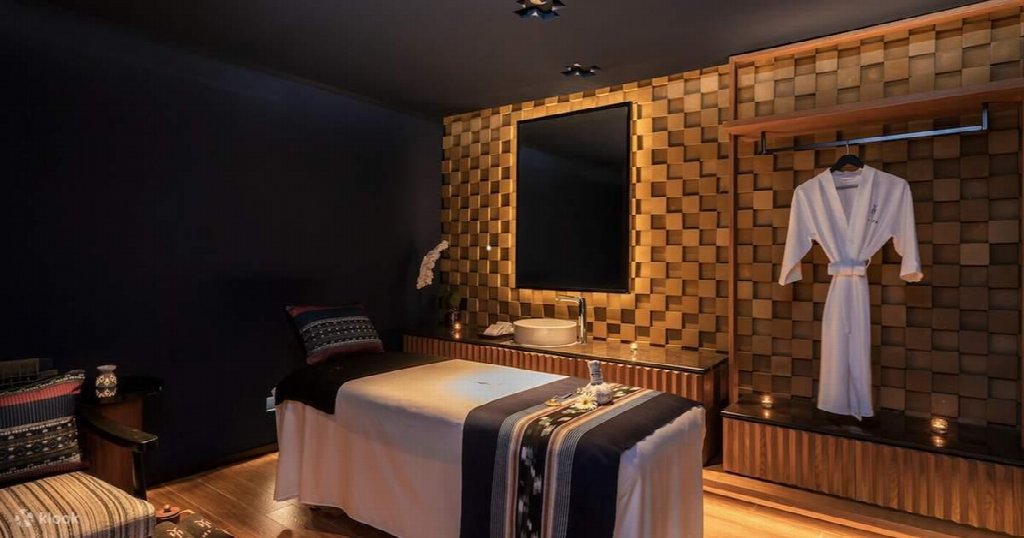
YHI Spa, Meliá’s signature spa concept, has seven private treatment rooms for massages and treatments designed around relaxation, balance and recovery. The wellness offering extends to a Herbal Blended Steam and an Exotic Sauna for gentle unwinding, and a fully equipped Fitness Centre for guests who prefer to keep moving. The hotel’s spa and lobby interiors have both been recognised at the Asia Pacific Property Awards.
The river through the seasons
The Ping River and the quarter around it change character noticeably through the year, and this is where you feel it most.
November to February, cool season. The reason many travellers consider this the best window in northern Thailand. Mornings are genuinely crisp, humidity falls away, and the light is clean and long, which is when the eastward view over the river is at its most striking. This is also festival season: Loy Krathong and Yi Peng fall in November, when Khom lanterns fill the sky and the river itself carries thousands of small floating offerings. Staying in the riverside quarter on these nights is a different experience entirely, and rooms are booked far ahead.
March to May, hot season. The city slows, and the pool, the spa and the upper-floor venues carry the day. The rhythm that works is early mornings out, the middle of the day indoors or in the water, and back out after five when the temperature drops and the Night Bazaar opens up.
June to October, green season. Rain tends to arrive in defined afternoon bursts rather than all day. The landscape turns intensely green, the river runs full and fast, and this is the quietest and often best-value time to visit. From a high floor, the storms are worth watching in their own right.
What to do along the river
Staying in this quarter opens up a particular version of Chiang Mai:
- Walk the riverbank early, when the light is soft and the city is still waking.
- The Chiang Mai Night Bazaar, a few hundred metres from the lobby, for carvings, textiles, antiques and street food.
- The Old Town and Wat Chiang Man, the city’s oldest temple, inside the historic moat and walls.
- Wat Chedi Luang, under two kilometres away, with its vast ruined chedi.
- Wat Umong, a serene forest temple known for its meditation tunnels, a short trip from the centre.
- Wua Lai silver village and the Bor Sang umbrella village, where traditional Lanna craftsmanship is still practised.
- Northern Thai cuisine, from riverside restaurants to the food stalls immediately outside.
- Yi Peng and the Khom lanterns, if your visit falls in festival season.
The team here approach their role the way a knowledgeable local host would, and are worth asking, Chiang Mai has an enormous number of day trips and workshops, and quality varies considerably.
Is this the right riverside base for you?
If your idea of Chiang Mai involves mornings by the water, afternoons that go nowhere in particular, and evenings watching the light fade over the Ping River from twenty-two floors up, with the Night Bazaar at the door and the Old Town minutes away, then the riverside quarter is where you want to be, and Meliá Chiang Mai puts you in the middle of it.
Ready to plan your stay? Check availability and current offers at Meliá Chiang Mai and discover the city from its river side.
Frequently asked questions
The hotel stands on Charoen Prathet Road in Chiang Mai’s riverside quarter, a historic street running parallel to the Ping River one block back from the water. The river is visible from the upper floors and from MAI The Sky Bar on the 22nd floor.
East-facing rooms look towards the Ping River; west-facing rooms look towards Doi Suthep. Floor-to-ceiling windows feature throughout, and higher floors offer the widest outlook. Corner and Premium Rooms add a wider angle of view.
MAI The Sky Bar on the 22nd floor is the highest rooftop bar in Chiang Mai, with two bars connected by a glass bridge and a full 360-degree view taking in the Ping River to the east and Doi Suthep to the west.
The Chiang Mai Night Bazaar is roughly 400 metres away on foot. Tha Pae Gate, the eastern entrance to the Old Town, is about 1.4 kilometres, and Wat Chedi Luang just under two kilometres.
Approximately six kilometres, usually around fifteen minutes by car. A paid airport shuttle service can be arranged.
November to February offers the coolest, clearest conditions and includes the Loy Krathong and Yi Peng festivals in November. March to May is hot and suits a pool-centred rhythm, while June to October is green, quieter and often better value.
Last Updated on August 27, 2026
