
There’s a moment on every winter fishing trip when the weather suddenly becomes more important than the bite. The wind turns sharp, your fingers go numb, and the real question is no longer “Where are the fish?” but “How long can we actually stay out here?” That’s exactly when a good shelter proves its value. The right ice fishing tent feels less like gear and more like a small, warm cabin you can drop anywhere on the ice.
For serious winter outings, choosing a reliable ice fishing tent is just as important as your rod, auger, or sonar. If you plan to fish late into the night or sleep on the ice, a spacious ice fishing tent with stove can turn brutal weather into a comfortable routine instead of a survival exercise. Paired with a safe mini wood burning stove, your frozen lake stops feeling like a hostile environment and starts feeling like a quiet winter basecamp.
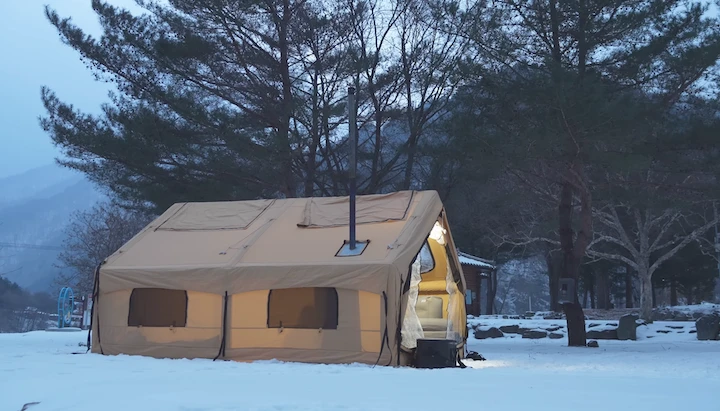
Why a dedicated ice fishing tent matters
You can sit on an open bucket and pretend the wind doesn’t bother you, but a dedicated shelter changes everything: how long you fish, how focused you stay, and how you feel when you finally pack up.
A well-insulated ice fishing shelter cuts the wind, blocks drifting snow, and traps heat so you can actually concentrate on your rods instead of counting minutes until you thaw out in the car. It gives you a calm, protected space to layer up, rig lines, retie knots, and keep your tackle organized instead of freezing to your fingers.
On overnight trips, the tent becomes the center of the whole experience. It smooths out temperature swings, protects you from sudden gusts, and lets you dry gloves, boots, and jackets between sessions. Instead of bailing early because you’re cold and exhausted, you get to reset, warm up, and go back to fishing on your own schedule.
The essentials of a modern ice fishing tent
Choosing the right ice fishing tent is easier when you break it down into a few key points: insulation, stove compatibility, usable space, and the way it behaves in real winter conditions.
Insulation, fabric, and wind protection
Cold is relentless. Thin fabric and weak seams will betray you on the nastiest days, no matter how strong your heater is. Look for a tent built from dense, durable material that doesn’t flap wildly in gusts and doesn’t soak through when the snow starts to melt and refreeze. An insulated or double-wall construction helps trap warm air inside and keeps icy drafts out.
A proper snow skirt around the bottom seals the gap between the tent and the ice, while reinforced corners and guy-out points stop the shelter from twisting in the wind. When the tent is designed for real winter, you feel the difference within minutes of stepping inside.
Stove compatibility and safe ventilation
If you fish in legit sub-zero conditions, a tent with a stove jack is a game changer. It allows you to run a compact wood stove, dry soaked gear, and actually enjoy long sessions rather than simply endure them. But heat without safety isn’t an option.
A good cold-weather tent places the stove jack in the right spot, uses heat-resistant materials, and leaves enough clearance between the stove and the walls. Just as important is ventilation: high and low vents that stay functional even in heavy snow, so fresh air can circulate while warm air stays inside. The best shelters are laid out so heat spreads through the whole interior instead of roasting one corner and leaving everyone else shivering.
Usable space, floor, and fishing layout
Interior space is more than a number on a product page. On the ice, every square foot competes with buckets, sleds, tackle boxes, heaters, and people in bulky winter gear. A tent that claims to fit four people might feel cramped once you drill multiple holes and spread out your equipment.
Think about how many anglers you usually fish with, how many lines you like to run, and where you want your holes in relation to the door and the stove. Removable or sectional floors let you customize the layout, keep most of the interior dry, and still drill holes exactly where you need them. A well-planned interior means you can move, fight fish, and refill the stove without stepping on each other’s boots.
Setup speed and real-world portability
When the wind is pushing your sled sideways across the ice, setup speed matters more than any spec sheet. Hub-style tents are popular because they pop open quickly and anchor down fast, even when you’re tired and wearing gloves. But not all “portable” shelters are equal.
Think about how far you usually walk or ride to your spots, how much other gear you carry, and whether you’ll be setting up in the dark. A tent that packs small, rides comfortably on a sled, and goes up intuitively becomes the one you actually reach for on every trip, not just on perfect-weather weekends.
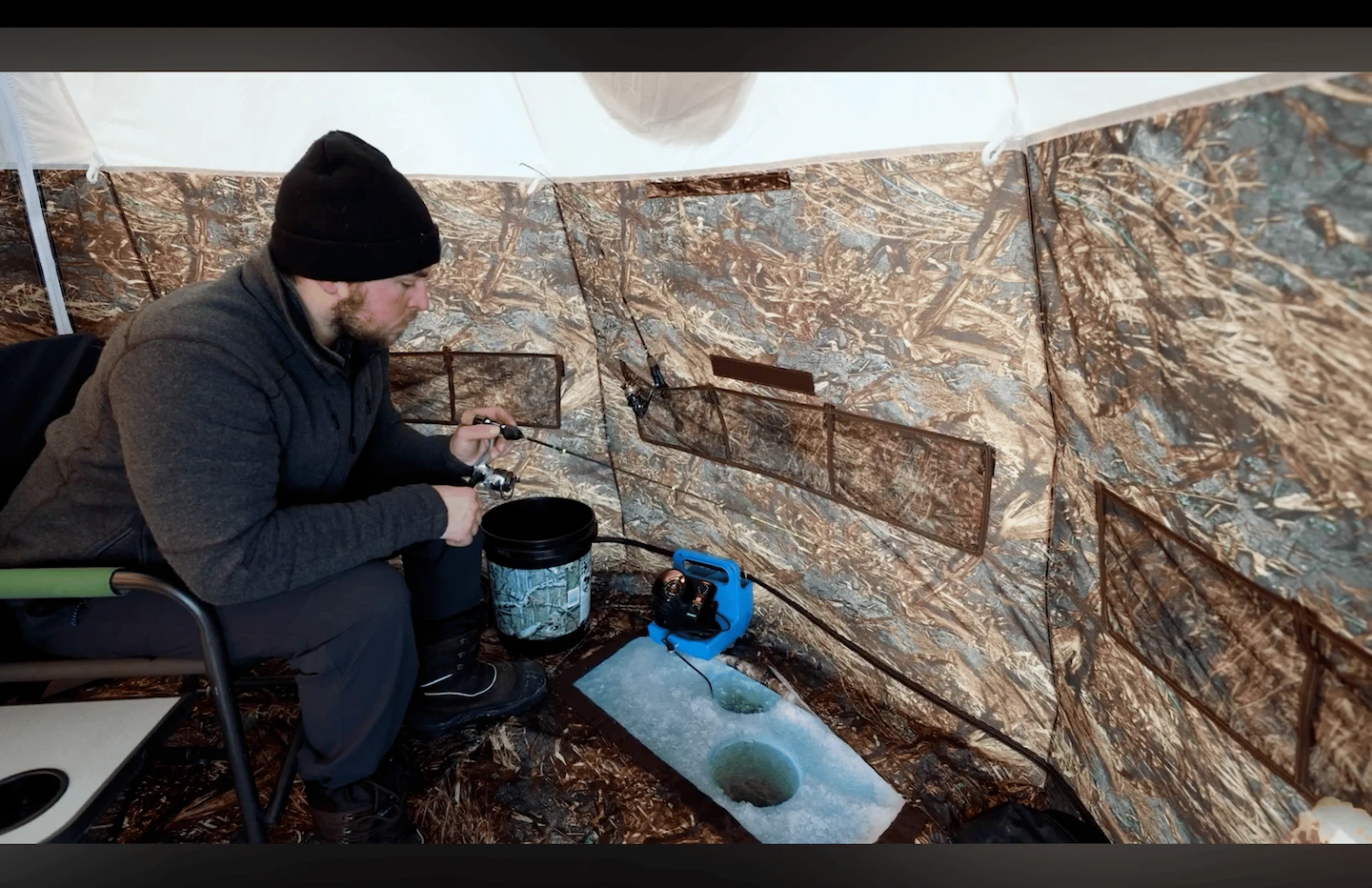
Matching the tent to your fishing style
There is no single “best” ice fishing shelter. The right one is the shelter that fits your habits, your crew, and your local winter.
If you fish short sessions close to the access point, you might prioritize lighter weight and quick setup over maximum insulation. For multi-day trips, long drives to remote lakes, or serious overnight fishing, comfort and warmth take the lead: extra headroom, more interior volume, and a layout that works with cots, a stove, and a full spread of gear.
Crew size matters, too. If you usually fish solo or with one friend, a compact insulated tent designed for two or three people is often ideal. When you bring the whole crew or family, a true four-to-six-person shelter makes a big difference. You’ll have room to move, cook, change layers, and still keep lines in the water without constantly bumping elbows.
Local weather is the final filter. In regions with milder winters and short cold snaps, a mid-weight insulated shelter can be enough. In places where the wind cuts hard and temperatures dive deep below freezing, it’s worth stepping up to heavier insulation, stronger frames, extra anchor points, and a design that’s been tested in real storms, not just in a parking lot.
A simple mental checklist before you buy
Instead of getting lost in specs, ask yourself a few practical questions:
- Will this tent keep me comfortable on the coldest days I actually plan to fish?
- Is there enough real space for people and gear, not just the number on the box?
- Can I set it up and take it down quickly when I’m cold, tired, and wearing gloves?
- Does the design handle a stove safely, with smart ventilation and a logical layout?
- Am I confident I’ll bring this shelter on every serious trip, not just once or twice a season?
If you can answer “yes” to those, you’re looking at a tent that will earn its place on the ice.
Final thoughts
A good ice fishing tent is more than shelter from the wind. It’s extra hours on the ice, better focus, safer decisions, and a lot more fun for everyone who steps inside. When the interior is warm, dry, and quiet, winter fishing turns from a test of toughness into something you genuinely look forward to.
Choose a tent that matches how you really fish, not just how you imagine your “perfect” trip. When your shelter feels like a small, reliable winter home, even the coldest days become days you’d happily repeat.
Last Updated on January 21, 2026
