
I’ve lost count of how many times I’ve driven the Delhi–Agra–Jaipur loop. Somewhere around the tenth trip, I stopped taking notes and started just knowing things — like which gate at the Taj Mahal has the shorter line, or why the second day of any golden triangle tour 4 days itinerary always runs a little long, no matter how early you start.
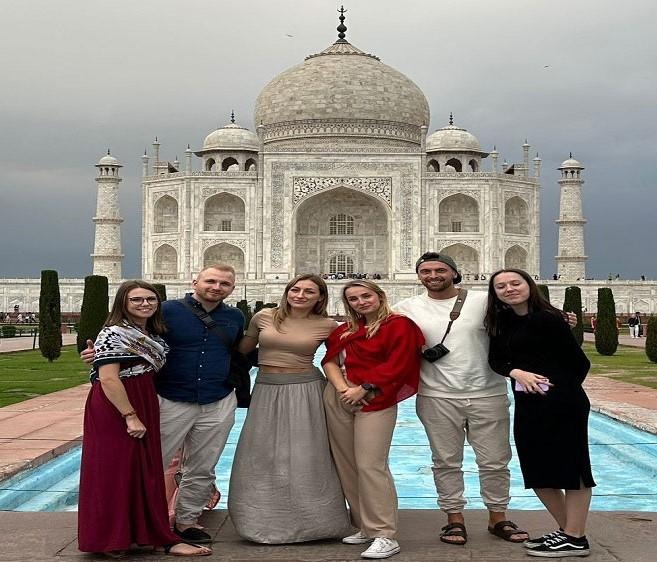
If you’re staring down a short vacation window and wondering whether four days is really enough to see Delhi, Agra, and Jaipur, I get the hesitation. This is the question I hear most from American travelers planning their first trip to India. Short answer: yes, with a few trade-offs worth knowing before you book anything.
This guide walks through what a real 4 days golden triangle india tour looks like on the ground — the driving times nobody mentions in the brochures, the entry fees that catch first-timers off guard, and the small decisions that separate a trip that feels rushed from one that feels full.
What Exactly Is the Golden Triangle?
The name sounds like a marketing invention, but it’s really just geography. Delhi, Agra, and Jaipur sit at the three points of a rough triangle in north India, each roughly 3 to 5 hours from the next by road. Connect them and you get a loop that covers two of India’s biggest historical eras in one trip: Mughal-era Delhi and Agra, and Rajput-era Jaipur.
It’s the standard first-timer’s route for a reason. You get the Taj Mahal, a walled Rajput capital built almost entirely from pink-washed sandstone, and the kind of old-city energy that makes north India feel like north India — all without needing an internal flight.
Is 4 Days Actually Enough?
Four days is the minimum I’d recommend, and I say that after watching a lot of travelers try to squeeze this route into three. Three days usually means Agra becomes a blur — you see the Taj Mahal, maybe Agra Fort if the timing works out, and that’s it. Jaipur either gets cut entirely or shrunk to a rushed afternoon.
Four days puts something closer to a full day in each city, plus a travel day between them. You’re not sprinting between monuments, and you get an actual morning in Jaipur instead of racing through Amber Fort with one eye on the clock.
If you have five days, take them — the extra day usually goes toward slowing down in Jaipur or adding a stop like Ranthambore. But four days genuinely works if the route is planned well. Think of it as a “see the essentials properly” trip, not a “cram everything in” one.
One thing worth flagging early: the Taj Mahal is closed to general visitors every Friday for weekly prayers, according to the official Taj Mahal ticketing page run by the Uttar Pradesh Tourism department. If your trip lands on a Friday, most operators simply flip the route to Delhi–Jaipur–Agra–Delhi so you still catch the Taj on the way back through. Ask about this before you lock in dates.
The Golden Triangle Tour 4 Days Itinerary, Day by Day
Here’s roughly how the four days break down when the route is run well. Every operator tweaks the order slightly, but this is the shape almost everyone follows.
Day 1 — Delhi: Old City, New City

Most days start around 9 AM with a hotel or airport pickup in Delhi. The morning goes to Old Delhi — Jama Masjid, a cycle-rickshaw ride through Chandni Chowk’s spice lanes, and a look at the Red Fort from outside its walls. In the afternoon you swing through New Delhi: India Gate, the government quarter around Rashtrapati Bhavan, Humayun’s Tomb, and Qutub Minar.
By late afternoon you’re on the road to Agra. The drive covers about 230 km on the Yamuna Expressway, a modern six-lane toll highway that turns what used to be a rough half-day slog into a 3 to 4 hour drive. You’ll check into your Agra hotel by early evening.
Day 2 — Agra: Taj Mahal at Sunrise, Then on to Jaipur

This is the day people build the whole trip around. You’re up before dawn for the Taj Mahal — sunrise isn’t just a photography cliché here, it’s genuinely the best time to go. The light is soft, the marble looks almost pink at first and shifts to white as the sun climbs, and the crowds are thinnest.
After breakfast, most itineraries head to Agra Fort, the red-sandstone fortress where Emperor Shah Jahan — the same man who built the Taj — spent his final years under house arrest, reportedly gazing at his wife’s tomb across the river. Then it’s back on the road toward Jaipur, a 4 to 5 hour drive with a stop along the way at Fatehpur Sikri, the abandoned Mughal capital that Emperor Akbar built and then left within about 15 years, likely due to water shortages.
This is the longest day of a 4 days delhi agra jaipur tour. Plan for a late check-in at your Jaipur hotel.
Day 3 — Jaipur: The Pink City

Jaipur gets a full day, and it needs one. The morning usually opens with Amber Fort, the hilltop Rajput palace about 11 km outside the city — its Sheesh Mahal (Hall of Mirrors) is worth lingering in longer than most guides give it credit for. From there it’s into the city proper: City Palace, Jantar Mantar (an 18th-century astronomical observatory that’s more interesting than it sounds), Hawa Mahal from the street outside, and usually a drive past Jal Mahal, the palace that appears to float in the middle of a lake.
Jaipur’s markets are also worth setting aside real time for — this is where you’ll find block-printed textiles, blue pottery, and gemstone jewelry, and where bargaining is expected rather than awkward.
Day 4 — Back to Delhi
The last day is mostly transit: a 4 to 5 hour drive back to Delhi, usually with a late-morning checkout and arrival back in Delhi by mid-afternoon, in time for an evening flight out. Some travelers use this drive to stop at Abhaneri’s step-well, Chand Baori, if their schedule and pickup point allow it — it’s a detour, not a default stop, so confirm with your driver in advance.
What a Golden Triangle India Tour Actually Costs
This is the part most guides gloss over. Costs break into three buckets: the visa, monument entry fees, and the tour or transport itself. None of these are included in each other, and that trips people up.
Visa
US citizens need a visa to enter India — there’s no visa-free or visa-on-arrival option for American passports. The e-Tourist Visa is the standard route. Although getting an eVisas is typically a straightforward digital process that takes just a few days for approval, applying at least a week or two in advance is highly recommended to avoid any unexpected logistical delays. As of 2026, the 30-day version runs roughly $25 to $40 depending on the season, plus a small bank processing fee. Your passport needs at least 6 months of validity and two blank pages.
Since April 2026, India has also required a free digital E-Arrival Card for all foreign visitors, completed online 24 to 72 hours before you land. It’s separate from the visa and takes about five minutes — don’t skip it, since it’s now checked at immigration.
Monument Entry Fees
Foreign visitors pay significantly more than Indian nationals at almost every monument on this route — this is official, published, tiered pricing, not a scam or a tourist markup. Here’s what it looks like based on current rates from the Archaeological Survey of India and Uttar Pradesh Tourism:
| Monument | Foreign Visitor Fee | Notes |
|---|---|---|
| Taj Mahal | ₹1,100 (~$13) | + ₹200 (~$2.30) for the inner mausoleum |
| Agra Fort | ₹650 (~$7.50) | Closes early on Fridays |
| Fatehpur Sikri | ₹610 (~$7) | Usually visited en route to Jaipur |
| Amber Fort (Jaipur) | ~₹1,000 (~$12) | Rajasthan revises fees periodically — confirm locally |
Per person, that’s roughly $30 to $35 in monument fees alone for the core sites, before you add anything like the Amber Fort light-and-sound show or an elephant ride. Almost every tour package — including the one listed on Taj Agra Tours’ 4-day itinerary — excludes monument entrance fees from the base price, so budget for them separately.
The Tour or Transport
For a private, 4-day, 3-night Golden Triangle package — car, driver, English-speaking guides, and hotel with breakfast — public pricing for comparable itineraries runs from around $220 per person at the budget end up toward $550+ per person if you upgrade to 5-star hotels. The spread comes almost entirely from hotel category, since transport and guiding costs stay fairly flat.
Taj Agra Tours, a locally-owned operator based in Agra, runs this exact 4-day Delhi–Agra–Jaipur itinerary with a choice of 3-star, 4-star, and 5-star hotel tiers, private air-conditioned transport, and local guides in each city. Like most operators in this space, they quote pricing on request once they know your travel dates and hotel preference, since availability shifts seasonally.
Best Time for This Trip
October through March is the window almost every experienced guide, including me, will point you toward. Daytime temperatures in Agra and Jaipur typically sit between the mid-60s and high-70s Fahrenheit, which makes walking around forts and gardens genuinely comfortable instead of a survival exercise.
April through June gets brutally hot — Agra regularly hits the low 100s°F, and mid-day sightseeing becomes something you plan around rather than something you enjoy. July through September brings the monsoon: humid, occasionally disruptive to road travel, but far less crowded and sometimes cheaper if you don’t mind the trade-off.
Practical Things Nobody Tells You Up Front
- The Taj Mahal is closed to general visitors every Friday. Plan around it or expect your operator to reorder the route.
- The base Taj Mahal ticket does not include the inner mausoleum. It’s a separate ₹200 add-on paid inside the complex, and it’s worth it.
- Since April 2026, all foreign visitors must complete a free digital E-Arrival Card 24–72 hours before landing in India. It’s separate from your visa.
- Petrol vehicles can’t come within 500 meters of the Taj Mahal for pollution control. You’ll transfer to an electric golf cart or e-rickshaw for the last stretch — this is normal, not an upsell.
- Dress modestly at religious and heritage sites: shoulders and knees covered is a safe default, especially at mosques and temples.
- No tripods, drones, or large backpacks inside the Taj Mahal complex. A small daypack with your phone, wallet, and passport is fine.
- Carry small rupee notes. Tipping drivers and guides in cash, and paying for minor purchases, is much easier with ₹100 and ₹200 notes than large bills.
- Bargaining is expected in Jaipur’s markets, not in malls or fixed-price government emporiums. Starting around 40–50% of the first quoted price is a reasonable opening move.
- Stick to sealed bottled water. Most hotels and private tours supply it throughout the day, which solves this automatically.
DIY Train Travel vs. a Private Tour
You can technically do this route on trains and hired local taxis city to city. Some travelers do, and it’s cheaper on paper. But for a first trip through India on a tight four-day window, I’d steer most people toward a private car-and-driver setup instead, and here’s the honest reasoning, not a sales pitch:
- Train schedules between these three cities aren’t always convenient for a same-day arrival-to-sightseeing flow, and booking foreign-tourist quota seats requires planning weeks ahead.
- A private driver means you’re not re-negotiating a new taxi and a new price in every city.
- Ticketing at the Taj Mahal and other monuments moves faster when a guide handles it, especially during peak season (November through February) when lines get long.
- Four days leaves very little slack for a missed train or a logistics hiccup to derail the whole trip.
If you go the private-tour route, it’s worth booking directly with a locally-owned operator rather than a big international booking platform — you typically get the same vehicles and guides for less, since you’re not paying a middleman’s commission on top. Taj Agra Tours is one such operator, based in Agra with its own vehicles and guide team across Delhi, Agra, and Jaipur, rather than subcontracting to third parties.
Frequently Asked Questions
Yes, for the core sites — Taj Mahal, Agra Fort, Fatehpur Sikri, Amber Fort, and Jaipur’s main city palaces. If you want a slower pace or want to add a wildlife stop like Ranthambore, look at a 5-day version instead.
Yes. There’s no visa-on-arrival for US passport holders. Apply for the e-Tourist Visa online before you travel, and complete the separate E-Arrival Card 24–72 hours before landing
Yes, every Friday, for weekly prayers. It’s open the other six days, from about half an hour before sunrise to half an hour before sunset.
Rough math for one traveler: $25–$40 for the visa, about $30–$35 in monument fees, and $220–$550+ for the tour package itself depending on hotel tier — so somewhere in the $300–$650 range per person before flights, meals beyond breakfast, and shopping.
Nothing — they’re the same trip. “Golden Triangle” is the traditional name for the route; “Delhi Agra Jaipur tour” describes it literally. You’ll see both terms used interchangeably by operators and guides.
The Takeaway
Four days through Delhi, Agra, and Jaipur is tight, but it works if you go in with realistic expectations. You won’t linger for hours anywhere. What you will get is a genuine first look at three cities that don’t resemble each other at all — a sprawling capital, a city built around one grief-stricken emperor’s monument to his wife, and a fortified pink city that still feels like it belongs to a different century.
That contrast, more than any single monument, is what makes people come back and do the 5-day or 6-day version next time.
About the Author & Tour Operator
Mayank Parmar is the Director of Taj Agra Tours, a premier boutique travel outfit based in Agra, India. Specializing in bespoke luxury journeys, private airport transfers, and VIP monument entry, Mayank and his expert team are dedicated to providing international travelers with safe, seamless, and unforgettably opulent experiences across Delhi, Agra, and Rajasthan.
Last Updated on October 12, 2026
